
When I started spending more time in Tangier, I kept noticing the same simple scene in different parts of the city: people sitting in cafés with a glass of Moroccan mint tea in front of them.
Mint tea was already familiar to me as a Moroccan, so at first I did not think of it as something worth exploring. What changed was paying attention to the setting. A glass of tea could mean a short break after walking through the Medina, a long conversation with friends, or simply sitting outside and watching the street.
That is what made Moroccan mint tea more interesting to me in Tangier. The drink itself is familiar, but the café, neighborhood, view, and people around you can completely change the experience.
In this article, I am sharing what I noticed about tea culture in Tangier, how the tea is prepared, and some of the places and areas where a tea stop can become part of exploring the city.
- Moroccan mint tea in Tangier
- How Moroccan mint tea is prepared
- Why cafés matter in Tangier
- Café Hafa: tea with a view
- Café de Paris and Place de France
- Petit Socco and Medina cafés
- Cinéma Rif and Grand Socco
- How to order mint tea
- Choosing a café comfortably
- Paying for tea and tipping
- Combining tea with sightseeing
- My final thoughts
Moroccan Mint Tea in Tangier
I already knew Moroccan mint tea before spending more time in Tangier, but I had never paid much attention to the small details surrounding it.
The classic preparation uses Chinese gunpowder green tea, fresh mint, usually spearmint or naana, and sugar. In northern Morocco, the taste can vary depending on the herbs available and the person preparing the tea.
Some versions may include aromatic herbs such as pennyroyal, known locally as flio. The result is that two glasses of Moroccan tea do not necessarily taste exactly the same.
The differences can come from the amount of mint, the amount of sugar, the strength of the green tea, and the herbs added to the pot. The basic combination remains recognizable, but the final taste can change quite a lot.

How Moroccan Mint Tea Is Prepared
One of the details that became more noticeable to me was the preparation and pouring of the tea.
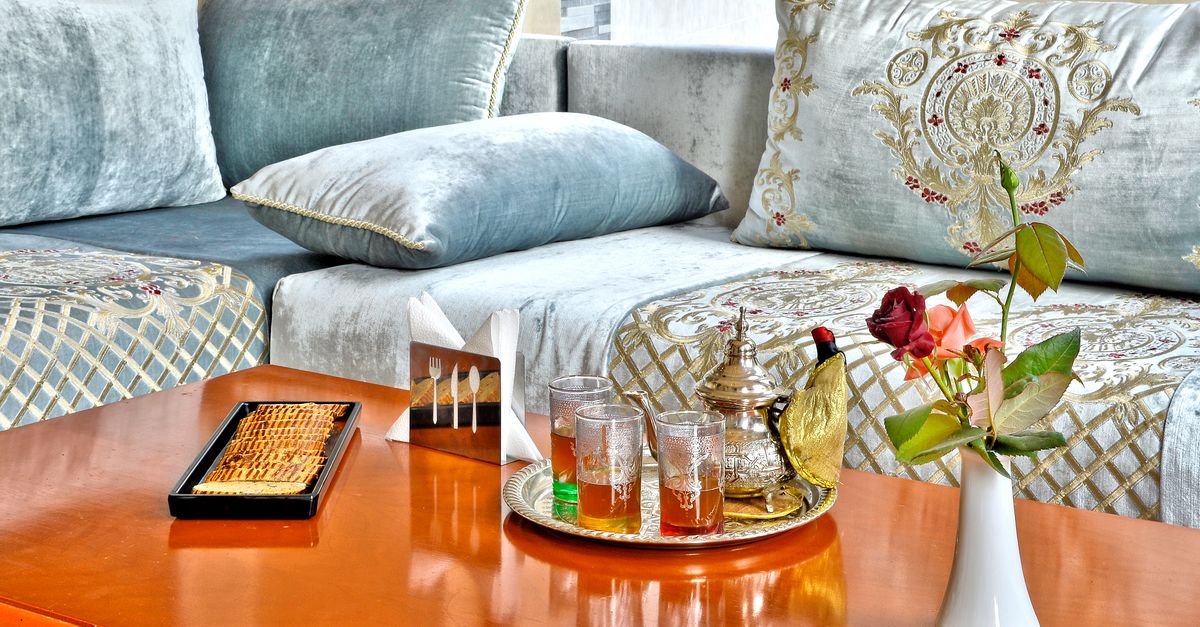
Traditionally, green tea is prepared in a metal teapot known as a berrad. Fresh mint and sugar are added to create the familiar combination of strong tea, sweetness, and mint.
The pouring is often the part visitors notice first. Tea can be poured from a height into the small glass rather than simply being poured directly from the pot.
This helps mix the contents and can also create a small layer of foam on the surface. It is a simple detail, but it is part of the presentation of Moroccan tea.
The tea can also be very hot, while traditional glasses have no handles. Holding the glass carefully is therefore more comfortable than gripping it around the middle immediately after it has been poured.
These details are small, but together they make drinking Moroccan tea feel different from simply ordering an ordinary hot drink.
Why Cafés Matter in Tangier
Spending time in Tangier's cafés made me notice that the café is often as important as the drink itself.
People meet friends, talk about everyday life, watch the street, read, or simply sit with a drink. There is not always a need to hurry through the experience.
Tangier also has a long international history. Between 1923 and 1956, the city was an International Zone, and its cafés became associated with writers, artists, travelers, and other international visitors.
Names such as Paul Bowles, William S. Burroughs, Henri Matisse, and Jack Kerouac are connected with different parts of Tangier's international and artistic history.
What I found more interesting, though, is that cafés are not simply historical attractions. They remain part of ordinary life in the city, which makes sitting down for tea a useful way to observe Tangier rather than just read about its past.

Café Hafa: Tea With a View
Café Hafa is one of the places that stayed in my mind from my time in Tangier.
The café is built on the hillside in the Marchan area, with terraces looking toward the Strait of Gibraltar. The setting is very different from sitting inside a conventional city café because the landscape becomes part of the experience.
On a clear day, the view toward the Strait and Spain can be the main reason to stay longer than planned.
What I Liked About Café Hafa
The café does not need an elaborate design to be memorable. Its simple terraces, blue and white details, and hillside position are enough to create a distinctive atmosphere.
Café Hafa is also associated with famous visitors, including writers and musicians. That history adds interest, but I would not make the visit only about the names connected with the place.
For me, the better reason is much simpler: having Moroccan mint tea while looking out toward the water.
When I Would Go
Late afternoon can be a good time if you want to combine the tea with the changing light over the Strait.
I would also allow enough time to sit rather than treating Café Hafa as a quick photograph stop. The whole point of the place is the setting.
The café can be reached from the Medina, although the walk includes an uphill section. A petit taxi can be more convenient if you prefer not to make the uphill walk.
Seating is generally first-come, first-served, so busy periods may mean fewer choices of where to sit.
Café de Paris and Place de France
Café de Paris offers a very different experience from Café Hafa.
Located at Place de France in the Ville Nouvelle, it places you in a more urban part of Tangier. Instead of a wide view over the Strait, the surroundings are streets, pedestrians, traffic, and the everyday movement of the city.
That difference is exactly why I would not try to decide which café is better. They are useful for different reasons.
Watching Tangier From a Café
One thing I enjoy about Moroccan café culture is that sitting down can be an activity by itself.
You can order tea, find a seat when one is available, and spend some time watching the movement around you without needing to plan another attraction.
Café de Paris also has historical connections with Tangier's international period, but the everyday atmosphere is what makes the stop interesting for me today.

Petit Socco and the Old Medina Cafés
For another side of Tangier, I would spend some time around Petit Socco.
The square is inside the old Medina and has traditionally been an important meeting point. Today, it is a useful place to pause while exploring the surrounding streets.
What I like about this area is that the café experience is directly connected to the Medina. You can sit with your tea while the streets around you continue moving.
Petit Socco also has an important place in Tangier's literary and bohemian history. Writers and other international visitors spent time around its cafés during the twentieth century.
The atmosphere is different today, but the square remains a natural stopping point during a walk through the old city.
Café Central
Café Central is one of the cafés associated with Petit Socco. Its position makes it convenient if you want to sit around the square while taking a break from exploring the Medina.
Café Fuentes
Café Fuentes is another nearby option to consider while exploring the area.
I would not travel to Petit Socco only to check a café off a list. Walk through the surrounding Medina first and stop when you actually want a break.

Cinéma Rif and Grand Socco
For a different atmosphere, the area around Place 9 d'Avril, commonly known as Grand Socco, is another part of Tangier worth exploring.
Cinéma Rif is one of the area's recognizable landmarks. It is an Art Deco cinema associated with the Cinémathèque de Tanger, giving this part of the city a more cultural atmosphere.
The atmosphere around here feels different from the older cafés of Petit Socco. It can appeal particularly to visitors interested in cinema, art, photography, and the more contemporary side of Tangier.
I like this contrast because it shows that Tangier's café culture is not simply preserved as a memory of the city's past. Traditional tea continues to exist alongside newer cultural spaces.
How to Order Mint Tea in Tangier
Ordering mint tea is straightforward.
In Moroccan Arabic, you can ask for atay. In French, which is also widely used in Tangier, you can ask for thé à la menthe.
If you do not want much sugar, mention this when ordering. Moroccan tea is often prepared sweet, and the sugar may already be mixed into the pot.
If you prefer to control the amount yourself, you can ask for the sugar separately. In Moroccan Arabic, expressions such as sukkar b'roho may be used; in French, you can ask for sucre à côté.
For a first visit, there is no need to overthink the process. Order the tea, see how it is served, and enjoy the experience.
Choosing a Café Comfortably
Cafés in Morocco are not all the same, and Tangier is no exception.
Some small neighborhood cafés may still have mostly male customers, while larger cafés, terraces, cultural spaces, hotel cafés, and well-known central locations tend to have a more mixed atmosphere.
As a visitor, I would simply choose a place where you feel comfortable rather than assuming every café will have the same atmosphere.
Well-known places such as Café Hafa and central Tangier cafés are accustomed to visitors, while smaller neighborhood cafés can feel more local and informal.
Paying for Tea and Tipping
I recommend carrying some Moroccan dirhams when visiting cafés, particularly smaller local establishments.
Payment methods can vary, and cash remains useful for small purchases.
Prices also depend on the café and the setting. A simple local café will generally offer a different price from a hotel, tourist-oriented terrace, or well-known viewpoint café.
If the price is not clearly displayed, ask before ordering. This is especially useful when there is no obvious menu.
For tipping, a small amount is appropriate when you are happy with the service. There is no need to make it complicated.
Combining Tea With Sightseeing
I would not plan an entire day around visiting cafés. Tea works better as a natural pause during a day of exploring Tangier.
After Exploring the Medina
After walking through the Medina, Petit Socco is an easy place to stop. You can sit for a while before continuing through the surrounding streets.
After Visiting the Marchan Area
If you are exploring the Marchan area, Café Hafa can work naturally as a break. The view gives you a reason to slow down rather than immediately move on to another attraction.
Around Grand Socco
Grand Socco can also be combined with a café stop. Explore the square and surrounding streets, then spend some time around Cinéma Rif and the nearby cultural spaces.
American Legation and the Medina
The American Legation Museum is close to the old Medina and can be combined with exploring the surrounding historic streets before stopping for tea around Petit Socco.
Mendoubia Gardens
If you are already around Grand Socco and want a quieter change of pace, Mendoubia Gardens can be combined with a walk before or after your café stop.
The main idea is simple: tea does not have to become another item on a sightseeing checklist. It can simply become part of the day.
My Final Thoughts About Tea Culture in Tangier
Before spending more time in Tangier, I mostly thought of Moroccan mint tea as a familiar drink. My experience in the city made me pay more attention to everything around the glass.
The interesting part is not only the tea itself. It is the place where you drink it, the people around you, the view, the neighborhood, and the amount of time you allow yourself to stay.
At Café Hafa, the Strait of Gibraltar becomes part of the experience. At Café de Paris, the streets and movement of central Tangier become the background. Around Petit Socco, the old Medina surrounds you, while Cinéma Rif represents a more contemporary cultural side of the city.
That variety is what I found most interesting.
If you visit Tangier, I would not recommend rushing from one attraction to another without stopping. Find a café, order an atay, and give yourself some time to sit.
You may discover that the tea itself is only half of the experience. The other half is simply sitting there and watching Tangier happen around you.
