
A wedding in the Moroccan Sahara is not simply a celebration for the bride and groom. It brings families, relatives, and wider community networks together around music, food, poetry, hospitality, and traditions that have been shaped by life in the desert.
What makes Sahrawi wedding customs especially interesting is the way these elements come together. The celebration may include a henna ceremony, the setting up of a khayma, traditional clothing, poetry in Hassaniya, the rhythms of the Guedra, large communal meals, and long evenings of tea and conversation. The details can vary between families and communities, but the emphasis on generosity and togetherness remains central to the picture presented here.

How a Sahrawi Wedding Unfolds
There is no single timetable that applies to every Sahrawi wedding, but traditional celebrations can extend over several days. The process begins before the main festivities, with family discussions and preparations gradually leading toward the public celebration.
The first stage is El Khotba, when representatives of the groom's family visit the bride's family to formalize the marriage agreement. The Mahr and other arrangements are discussed, and preparations can then begin in earnest.
Henna forms another important part of the preparations. Female relatives and a henna artist, known here as the Nekkasha, decorate the bride's hands and feet. As elsewhere in Morocco, henna is associated with beauty, blessing, and protection, but the particular designs and customs surrounding the ceremony can differ from one community to another.
Another striking feature is the khayma, the traditional tent associated with Sahrawi life. During a large wedding, ceremonial tents provide a place for guests to gather, eat, talk, and enjoy the performances. The arrival of the groom's party can become a celebration in itself, with gifts, drums, singing, and ululations adding to the atmosphere.
The bride may also remain partly shielded from public view during part of the celebration. This practice, referred to in the source tradition as El H'jab, reflects modesty and the bride's transition into married life.

Clothing That Reflects the Desert
Traditional clothing gives a Sahrawi wedding much of its visual character. The bride's Melhfa is a large piece of fabric wrapped around the body, with wedding versions sometimes made from finer or more richly decorated materials. Jewelry can include silver, amber, and other ornaments associated with southern Moroccan traditions.
The groom traditionally wears a Darra'a, a loose robe suited to the desert climate. White and blue are among the colors associated with the garment, while a wrapped head covering such as the Tagelmust or Lissam completes the outfit in the tradition described here.

When the Music Takes Over
Music is one of the parts of a Sahrawi wedding that is difficult to separate from the rest of the celebration. It accompanies arrivals, dancing, poetry, and the long social gatherings that continue into the evening.
The Guedra is one of the best-known performances associated with the Saharan cultural sphere. Its rhythm is accompanied by chanting and handclapping, while a female dancer uses controlled movements of the hands and fingers as part of the performance.
Poetry adds another layer. Hassaniya oral traditions have an important place in Sahrawi culture, and wedding gatherings can provide an opportunity for verses of affection, admiration, humor, and praise. The tradition of Tbra'a, in particular, is associated with short poetic expressions often performed by women.
The combination of rhythm and poetry gives the celebration a character that is very different from simply putting on recorded music for a party. The performance itself becomes part of the social gathering.
A Wedding Table Built Around Generosity
Food is another way a family demonstrates hospitality. In a large desert celebration, serving guests generously is not just about feeding people; it is part of welcoming them properly.

Méchoui, or whole roasted lamb, can serve as a centerpiece for a major feast. Meat is also prepared in other forms, including regional dishes using camel meat. Traditional preparations such as Tidgit reflect older methods of preserving meat, while couscous remains an important communal food for large gatherings.
These dishes are usually less interesting when considered individually than when seen as part of the occasion. Large platters, several people eating together, constant conversation, and the movement of food and tea between guests all contribute to the sense of hospitality.
Tea, Conversation, and Desert Hospitality
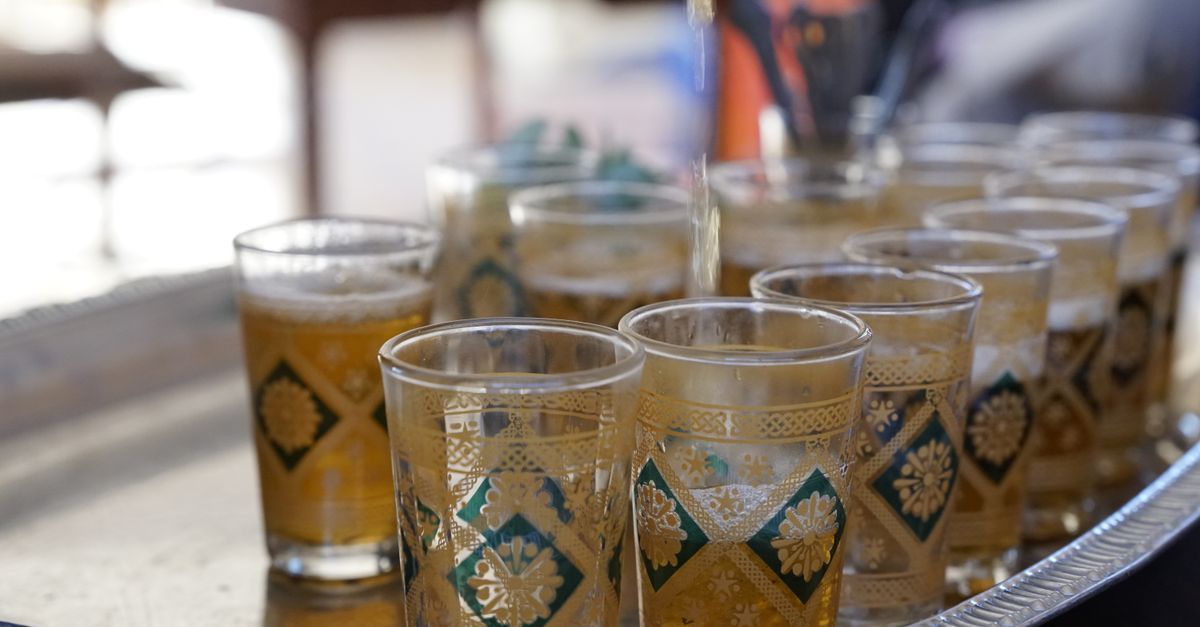
No discussion of a Sahrawi gathering feels complete without Atay. Tea is more than a drink during a wedding. Its preparation creates pauses in the celebration where people sit, talk, and spend time together.
The familiar three-glass tradition is often described through the contrast between bitterness, sweetness, and lightness. Green tea, mint, and sugar are prepared and poured from a height, producing the characteristic foam on the surface.
For a visitor, this may be one of the quieter parts of the celebration, but it is also one of the easiest ways to understand the importance of hospitality. Not everything at a wedding has to happen on a stage. Much of the experience takes place around a glass of tea and a conversation.
Where Travelers Can Encounter Sahrawi Culture
A private family wedding is naturally different from a public cultural event, and visitors should not expect to attend one simply because they are traveling through southern Morocco. There are, however, public gatherings and cultural events that can provide an introduction to Sahrawi traditions.
Tan-Tan Moussem
The Tan-Tan Moussem is one of the cultural gatherings associated with nomadic heritage in southern Morocco. It brings together performances, traditional activities, crafts, and other expressions of desert culture.
For travelers interested in this side of Morocco, a public gathering such as this can offer a more appropriate way to encounter traditional music, poetry, clothing, and camp life without intruding on a private family ceremony. Dates can change, so checking the current schedule before traveling is important.
A Few Things to Keep in Mind as a Guest
If you are genuinely invited to a family celebration, the safest approach is to follow the hosts rather than assuming that every custom described in a travel article applies to their wedding.
Modest clothing is appropriate, particularly for gatherings involving older relatives or more traditional families. Photography also deserves care. Ask before photographing people, especially women and elders, and do not assume that an interesting ceremonial moment is automatically something you can record and publish.
A small gift can also be a thoughtful gesture. Dates, good tea, or quality sugar are examples mentioned in connection with desert hospitality, although the most appropriate choice will always depend on the family and the circumstances of the invitation.
A Living Tradition, Not a Single Formula
What makes Moroccan Sahara wedding traditions interesting is not that every wedding follows exactly the same script. It is the way older customs continue to meet modern life.
The Melhfa, the sound of drums, Hassaniya poetry, communal food, the khayma, and the ritual of serving tea all point toward a culture in which marriage is connected to family and community rather than treated only as a private event.
For travelers, the most respectful way to approach these traditions is with curiosity but also with restraint. Sahrawi communities are diverse, and customs can change from one family or region to another. A wedding is ultimately a family's celebration, not a performance arranged for visitors. Understanding that distinction makes the cultural experience much more meaningful.
