
One of the nicest things about Chefchaouen is that there never seems to be much reason to hurry. After walking through the blue streets for a while, it is easy to end up at a small café, order a glass of mint tea, and simply stay there for a little longer than planned.
The cafés here are part of everyday life rather than something reserved for visitors. In the morning, people stop for breakfast and coffee. Later in the day, the tables around the squares become busier, and by late afternoon the terraces are a comfortable place to sit after walking up and down the steep streets of the medina.

Why Café Life Feels Different in Chefchaouen
Chefchaouen has a slower rhythm than Morocco's larger tourist cities. There are fewer cars inside the old medina, the streets are narrow, and much of daily life happens within walking distance of home, shops, and the main squares.
That makes the local café an easy meeting point. Someone may stop for a quick coffee before work, while another person sits with friends over tea and conversation. Visitors often do the same without realizing how quickly an hour can pass.
The best-known place for this is Plaza Uta el-Hammam. Cafés surround the square, facing the Kasbah and the steady movement of people through the medina. It can be busy in the afternoon, but mornings are usually calmer. Sitting there early, with a coffee or tea in front of you, gives you a very different view of Chefchaouen from simply walking through its blue lanes.
A Good Time for Breakfast
Morning is one of my favorite times to sit at a café in Chefchaouen. The air is cooler, the streets are quieter, and the mountains are often easier to see before the day becomes hazy.
Breakfast is usually much more substantial than a drink and a pastry. A table can quickly fill with warm bread, olive oil, cheese, honey, and Moroccan pancakes, along with coffee or tea.

Jben and Fresh Bread
One food worth looking for in the Rif is jben, a fresh cheese traditionally associated with northern Morocco. It is soft and mild, and it works particularly well with warm bread and olive oil.
You may also see local goat cheese sold in markets around the town. The flavor can vary from one producer to another, so I would not expect every serving to taste exactly the same.
Msemmen, Baghrir, and Harcha
Msemmen is the familiar square Moroccan flatbread with thin layers that become crisp around the edges when cooked. It is usually eaten with butter, honey, cheese, or olive oil.
Baghrir has a completely different texture. Its surface is covered with tiny holes, which makes it particularly good at holding melted butter and honey.
Then there is harcha, a denser semolina bread with a crumbly texture. It is less delicate than baghrir and makes a filling breakfast when served with cheese, jam, or olive oil.
For a simple local breakfast, warm bread, jben, olive oil, and a glass of mint tea are hard to beat.

Rooftop Cafés or a Table in the Street?
There are two very different ways to enjoy a café in Chefchaouen. A rooftop gives you the view; a table at street level gives you the atmosphere.
Rooftop Terraces
The town climbs into the Rif hills, so some cafés and restaurants make good use of the height by placing tables on upper terraces. From above, the blue rooftops become more noticeable, and on a clear day you can see the surrounding green hills beyond the town.
These places are especially pleasant later in the afternoon, when the direct heat begins to soften. They are also useful if you want to take photographs without standing in the middle of a busy alley.
Keep in mind that reaching a rooftop usually means climbing stairs. Some buildings have quite narrow staircases, so a rooftop café is not always the easiest option for anyone who has difficulty with steps.
Street-Level Cafés
Street-level cafés have a completely different feeling. Around Uta el-Hammam and the smaller squares and lanes, you are close to everything happening around you.
People pass with shopping bags, shopkeepers talk with one another, children move through the streets, and cats seem to have claimed many of the warm corners. During busy periods the area can become crowded, but that is also part of the experience.
If you are more interested in watching everyday life than getting a perfect photograph, I would choose a street table.
What to Drink
Moroccan cafés keep their drink menus fairly simple, which makes ordering easy once you know a few names.
Atay — Mint Tea
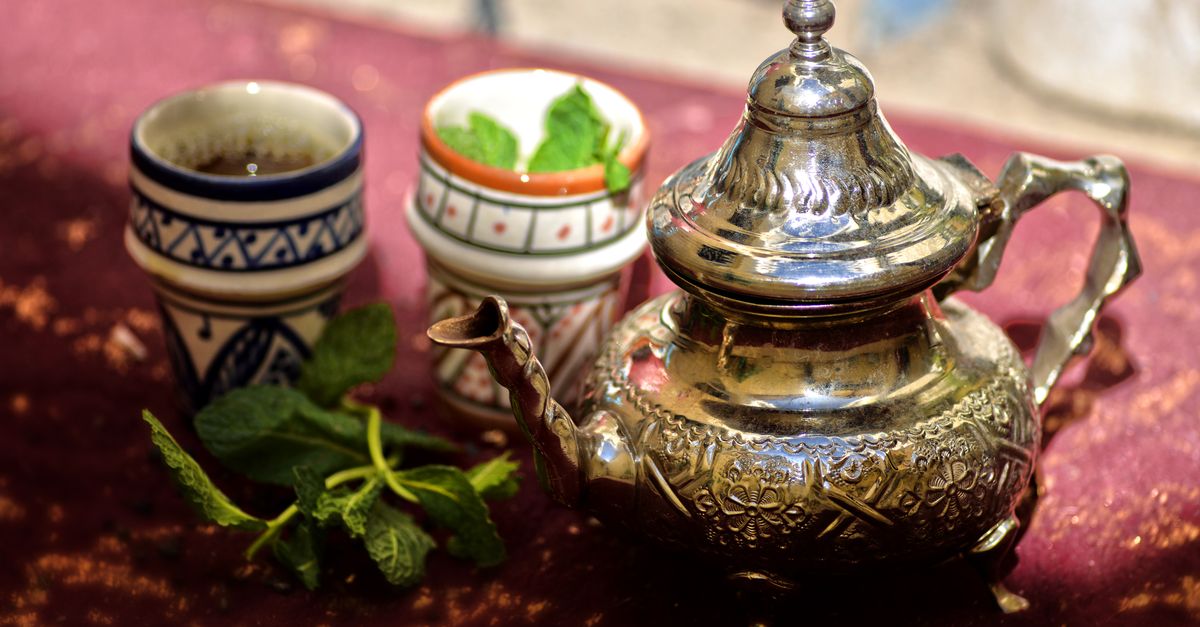
Mint tea, or atay, is the obvious choice if you want something connected to Moroccan hospitality. Green tea is combined with fresh mint and sugar, then poured into small glasses.
The pouring is part of the presentation. The teapot is raised above the glass and the tea falls in a thin stream, creating a little foam on the surface.
Tea can be quite sweet, so if you prefer less sugar, it is worth asking before the pot is prepared. In cooler weather, some cafés also use herbs such as sheeba, giving the drink a more herbal and slightly bitter taste.
Nous-Nous
If tea is not your thing, try nous-nous. The name means roughly "half-half" in Moroccan Arabic and refers to the combination of coffee and steamed milk.
It is normally served in a small glass and is one of the easiest coffee orders to make anywhere in Morocco.
Café Noir and Café Cassé
Café noir is the straightforward option for strong black coffee. Café cassé has a little milk added to the coffee.
There is no need to overthink the menu. If you are unsure, watching what people at nearby tables order can also help.
The Small Things That Make a Café Visit Easier
There is not much complicated etiquette involved, but a few small habits make café visits more comfortable.
First, do not feel that you have to finish your drink quickly. Sitting for a while is normal. A café table is often as much a place for conversation and watching the street as it is for drinking.
Cash is also useful. Smaller cafés are not always equipped for card payments, and having 10, 20, or 50 dirham notes makes paying much easier than handing over a large note.
If you photograph people, ask first. This is particularly important in quieter neighborhood cafés where visitors are less common.
A small tip is appreciated when the service is good, although the amount depends on the place and the situation.

What to Do After Your Coffee
One advantage of café culture in Chefchaouen is that you rarely need to travel far to find something else to do.
Walk to Ras El Maa
After breakfast, you can continue toward Ras El Maa, where water emerges from the mountain above the eastern side of the medina. The area is a pleasant place to cool down after walking through the town.
Walk Toward the Spanish Mosque
For a longer walk, the path toward the Spanish Mosque is especially popular around sunset. From the hillside, Chefchaouen spreads below you, with the blue medina surrounded by the green Rif landscape.
A good way to do it is to have tea first, walk afterward, and reach the viewpoint when the light begins to change.
Visit the Kasbah
The Kasbah sits directly beside Uta el-Hammam. It is an easy stop to combine with a café break, especially if you are already spending the morning exploring the old medina.
A Few Practical Things to Know
Chefchaouen's medina is beautiful, but it is not especially easy to walk for everyone. The streets include stairs, uneven paving, and steep sections. Rooftop cafés add another set of stairs, so street-level places are usually more convenient if mobility is a concern.
Summer afternoons can also become hot. Early morning and late afternoon are generally more comfortable times to sit outside, while a shaded café can be a welcome escape during the middle of the day.
Dress does not need to be overly formal, but modest clothing is a sensible choice when spending time in the medina and around local cafés.
Enjoy Chefchaouen Without Rushing
The nicest café experience in Chefchaouen may not be the one with the highest rooftop or the most photographed table. Sometimes it is simply a small table in the shade, a glass of mint tea, warm bread on the side, and enough time to watch the street for a while.
That is what makes café culture here worth experiencing. You do not have to plan every minute. Walk through the blue streets, stop when you find a place that looks comfortable, order something simple, and stay for a while. In a town built around a slower pace, there is really no reason to rush.
