
One of the things that can surprise travelers in Morocco is how quickly a simple visit can turn into a long evening. You may arrive expecting to sit for a short cup of tea, only to find yourself comfortably settled on a Moroccan sofa while someone brings out more tea, bread, food, fruit, and sweets.
This generosity is not simply a way of being polite. Hospitality, often referred to as diyafa, has a deep place in Moroccan family life. A guest is treated with respect, and offering food and drink is one of the most natural ways of showing it.
You can see this spirit in many different situations. It may happen during a visit to a family home, a stay in a traditional riad, a cooking experience, or an organized dinner with local hosts. The setting can change, but the feeling is often similar: the guest is encouraged to relax, eat well, and feel welcome.

The Moroccan Home: Where Guests Usually Sit
In a traditional Moroccan home, much of the social life of the family revolves around the salon. The salon marocain is usually arranged with long upholstered benches called seddari along the walls, with cushions making the space comfortable enough for long conversations.
For a visitor, the first thing to notice is that the room is designed for people to stay together. Instead of everyone sitting in separate chairs, family members and guests share the same continuous seating area. This makes conversation feel more natural, particularly when several generations are present.
Guests may also be given a particularly comfortable or central place to sit. The exact arrangement varies from one home to another, so there is no need to worry about memorizing a strict seating chart. The simplest approach is to follow the host's invitation and let them show you where they would like you to sit.
Family members who are helping with the meal or tea may sit closer to the serving area, allowing them to move easily between the kitchen and the guests. In a busy Moroccan home, you will often notice people getting up repeatedly to bring another dish, refill glasses, or make sure everyone has enough to eat.
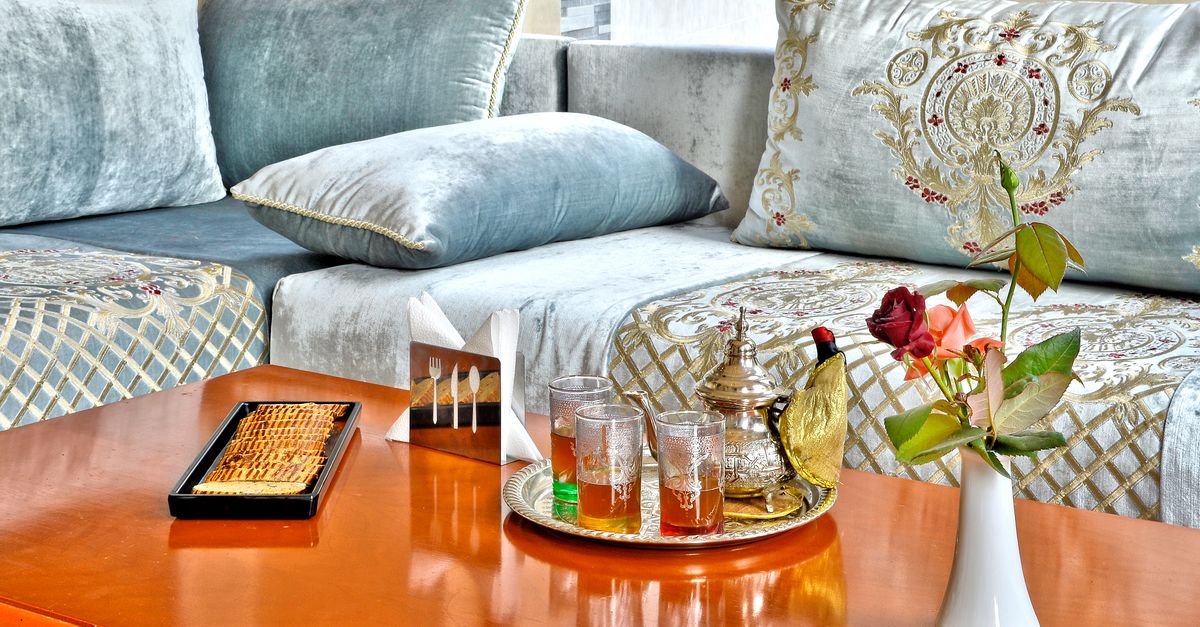
Mint Tea: Often the Beginning of the Visit
For many travelers, Moroccan hospitality becomes especially noticeable when the tea arrives.
Mint tea, known as atay or atay b'na'na, is closely associated with welcoming guests. It can appear early in a visit and may be served before the main meal. The familiar combination of green tea, fresh mint, and sugar creates an atmosphere that is as much about conversation as it is about drinking.
The tea is traditionally prepared in a metal teapot and served in small glasses. One of the details visitors often notice is the height of the pour. The host lifts the teapot above the glass and allows the tea to fall in a thin stream, creating foam on the surface.
For someone experiencing this ritual for the first time, the preparation itself can be as interesting as the drink. Tea is not simply placed on the table and forgotten. It becomes part of the interaction between host and guest.
The strength and ingredients can also vary. Fresh spearmint is common, while other herbs may be used depending on the household, season, or region. Some hosts prefer a very sweet tea, while others may prepare it differently.
Guests are often offered several glasses during a visit. Rather than thinking of this as a formal rule that must always be followed, it is better to see the repeated serving of tea as part of the rhythm of Moroccan hospitality. If your glass is refilled, it is usually a sign that the host wants you to stay, relax, and continue the conversation.

When Tea Turns Into a Meal
One of the easiest mistakes a visitor can make is assuming that a Moroccan invitation will remain a short visit. Food has a way of appearing when you least expect it.
A host may begin with tea and bread and then bring out a tagine, salads, couscous, pastries, fruit, or another homemade dish. The quantity can feel surprising, especially when you realize that the host has prepared much more food than the people at the table could reasonably finish.
That abundance is part of the gesture. Offering plenty of food communicates generosity and makes the guest feel that they are being properly looked after.
Tagine
Tagine is probably the dish most closely associated with Moroccan food outside the country, but eating it in a home or traditional setting gives the dish a different meaning. The meal is usually placed in the center of the table and shared rather than served as a separate individual portion.
Recipes vary widely. Chicken may be combined with preserved lemon and olives, while lamb or beef can appear with vegetables, prunes, almonds, or other ingredients. The slow cooking gives the meat and vegetables time to absorb the spices and their own juices.
Couscous
Couscous has an especially strong connection with family meals and Friday gatherings. A large serving can arrive at the center of the table, surrounded by vegetables and meat, with broth available to moisten the grains.
For travelers, Friday can be a particularly interesting time to encounter Moroccan food culture because couscous remains strongly associated with the weekly family meal. The experience is less about ordering a famous dish and more about watching how food brings people together.
Pastilla and Festive Dishes
Some dishes are more closely associated with celebrations and special guests. Pastilla, with its delicate pastry and combination of savory and sweet flavors, is one example. Elaborate dishes like this can require considerable preparation, which makes serving them to visitors a meaningful gesture.
Other celebrations may involve mechoui, a whole roasted lamb prepared for a larger gathering. The important point is not that every Moroccan family serves the same dishes, but that special occasions often bring more elaborate food to the table.

How to Eat at a Moroccan Family Table
If you are invited to eat with a Moroccan family, there is no need to feel nervous about doing everything perfectly. Watching what the people around you do will usually tell you most of what you need to know.
Before eating, guests may be offered water to wash their hands. In a traditional setting, someone may pour the water over your hands using a small pitcher and basin. In a modern home, you may simply be directed to the sink.
Food is commonly eaten with the right hand. Moroccan bread, or khobz, is especially useful because it can be torn into small pieces and used to pick up food from the shared dish.
When several people are eating from the same platter, a useful rule is to stay within the area of the dish directly in front of you. You do not need to reach across the entire platter to take something from another person's side.
Most importantly, follow the host. If they show you where to eat from, offer you a piece of meat, or encourage you to take more food, accept the gesture warmly even if you cannot eat everything.
You may hear the familiar encouragement "Kool, kool!"—"Eat, eat!" It is a simple expression of hospitality, especially when the host thinks you have not eaten enough.

What Should You Bring When Visiting a Moroccan Home?
If you are invited to someone's home, bringing a small gift is a thoughtful way to show appreciation. It does not have to be expensive. A box of Moroccan pastries, seasonal fruit, flowers, or good-quality tea can all work well.
The important thing is the gesture rather than the price of the gift. If you are unsure what would be appropriate, something simple that can be shared by the family is usually a safe choice.
You should also pay attention to footwear. Some Moroccan homes prefer outdoor shoes to be removed at the entrance, particularly when carpets cover the floors. Rather than assuming, simply look at what the family members are doing or ask politely.
Dietary Restrictions: Tell Your Host Early
Moroccan cooking includes many dishes based around meat, but vegetables, salads, couscous, bread, and vegetable tagines are also important parts of the cuisine.
If you are vegetarian, have an allergy, or follow a particular diet, mention it before the meal rather than waiting until food is already on the table. Giving the host some notice makes it much easier for them to prepare something suitable without feeling that their hospitality has been rejected.
This is especially important during an organized family dinner, cooking experience, or homestay, where the meal has been planned specifically for visitors.
Do Not Rush the Evening
Perhaps the biggest adjustment for a traveler is simply the pace.
A Moroccan family meal is not necessarily something to finish quickly before moving on to the next activity. Tea can continue after dinner. Fruit or pastries may appear later. Conversations can stretch on while everyone remains seated together.
If you are invited into a home, leaving immediately after finishing your food can feel very different from what the host intended. When possible, give yourself enough time to enjoy the social side of the visit rather than treating the meal as another item on a sightseeing schedule.
Experiencing Moroccan Hospitality as a Traveler
You do not have to become an expert in Moroccan etiquette before accepting an invitation. A few simple habits go a long way: greet people warmly, accept tea when you comfortably can, use your right hand when eating, follow the host's example, and show genuine appreciation for the food.
There is also no need to turn every tradition into a strict rule. Moroccan homes are not identical, and customs can differ between families, cities, generations, and regions. What matters most is paying attention to the people around you.
For travelers, this is what makes Moroccan hospitality memorable. The experience is not only about the food on the table or the beautiful room where you are sitting. It is the small interaction behind it—the glass of tea being offered again, the host insisting that you try another dish, the bread placed within reach, or a family making room for you at their table.
Those moments reveal something that a guidebook cannot fully explain: in Morocco, sharing food is often a way of saying that you are welcome.
Practical Tips for Travelers
- Start with a warm greeting: A simple Salam Alaykum is a respectful way to begin.
- Follow your host: If you are unsure about seating, food, or shoes, simply observe what the family does.
- Use your right hand: This is the traditional hand used for eating and sharing food.
- Try the tea: Mint tea is an important part of welcoming guests, and accepting a glass can be a nice way to participate.
- Tell hosts about dietary needs early: This gives them time to prepare alternatives.
- Do not rush: Leave enough time for conversation and the slower rhythm of a Moroccan meal.
- Show appreciation: A sincere shukran and a warm smile are often enough.
Moroccan hospitality is ultimately less complicated than it may first appear. You do not need to memorize every custom. Be respectful, stay curious, and allow the people hosting you to guide you through the experience. Once you stop worrying about doing everything perfectly, it becomes much easier to enjoy what is really being offered: not just a meal, but a place at the table.
