
Ramadan feels different in the Moroccan Sahara. Across southern towns surrounded by desert landscapes, palm-filled oases, and long stretches of open land, the month follows the same spiritual rhythm found throughout Morocco, but local traditions give the evenings their own character.
In places such as Laayoune, Dakhla, Guelmim, Smara, Zagora, and Rissani, daytime tends to become quieter during the fast. People adjust their routines around prayer, work, heat, and the dry desert climate. Then, as the sun disappears, the atmosphere changes almost completely. Families gather for ftour, cafés begin filling again, markets become active, and conversations continue late into the night.
For travelers, this change from a quiet daytime atmosphere to a lively evening scene is one of the most interesting aspects of experiencing Ramadan in southern Morocco. Sahrawi hospitality, traditional food, tea ceremonies, and gatherings inside the khaima all become part of the experience.
The Rhythm of Ramadan in the Moroccan Sahara
Life in the desert requires people to pay close attention to the rhythm of the day. During Ramadan, this becomes even more noticeable.
In towns such as Guelmim and Zagora, daytime activity can slow considerably. Some shops and businesses adjust their opening hours, while residents spend more time indoors or in shaded spaces. The combination of fasting, heat, and dry air naturally encourages a slower pace.
As sunset approaches, however, the streets begin to change. Families prepare food, markets become busier, and people make their way home before Maghrib. Dates, bread, milk, and other ingredients are prepared for the evening meal.
When the call to prayer announces sunset, families finally break the fast. In homes, courtyards, cafés, and desert camps, the first moments of ftour are often calm and intimate before the evening gradually becomes more social.
Sahrawi Ftour: Zrig, Dates, and Desert-Inspired Food
Moroccan Ramadan cuisine varies from one region to another. In the Sahara, local ingredients and Sahrawi culinary traditions add another layer to the familiar ftour table.
Zrig: A Traditional Camel Milk Drink
Zrig is one of the drinks most closely associated with Sahrawi food traditions. It is generally prepared using camel milk mixed with water and, depending on the preparation, sugar or another sweetener.
For visitors, trying Zrig can be an interesting way to discover a food tradition connected to pastoral life in the desert. Camel milk has long been an important part of the diet in Sahrawi communities, particularly in areas where raising camels has played an important role in everyday life.
Dates from the Southern Oases
Dates naturally have an important place at Ramadan ftour. Southern Morocco is home to several major date-growing areas, including the valleys associated with the Draa and Ziz rivers.
Depending on the region and season, visitors may encounter varieties such as Mejhoul and Boufeggous. They are often served at the beginning of the meal alongside water or another drink.
Camel Meat and Regional Dishes
Camel meat is another food associated with the culinary traditions of Morocco's southern regions. It may appear in stews, tagines, grilled preparations, or family meals, depending on the household and location.
Other southern dishes can include barley-based soups, breads, couscous, and simple preparations using ingredients that have traditionally been available in oasis and desert communities.
Khobz and Traditional Desert Bread
Bread remains an important part of Moroccan meals, and southern communities have their own traditional preparations. Some desert bread traditions involve cooking thick dough close to hot embers, reflecting older cooking methods associated with nomadic life.
Served warm with olive oil, butter, honey, or other accompaniments, bread can become one of the simplest and most satisfying parts of an evening meal.
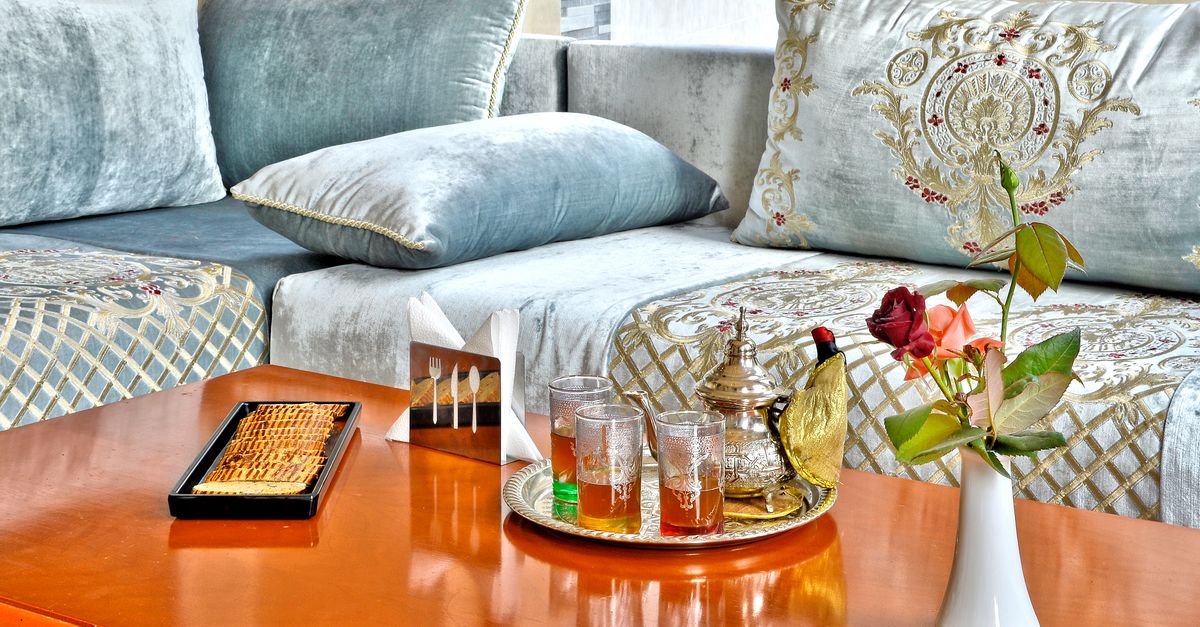
The Hassani Tea Ceremony: More Than Just a Drink
After ftour, tea often becomes the center of the evening.
Tea has an important social role throughout Morocco, but in Sahrawi culture the preparation and sharing of tea can become a particularly long and deliberate social ritual. It provides time for people to sit together, talk, exchange news, and simply enjoy one another's company.
The Three Rounds of Tea
The traditional ceremony is commonly associated with three successive glasses. The flavor changes as the tea is prepared and served again, creating a gradual progression throughout the gathering.
- The First Glass: Traditionally stronger and more intense, often associated with the character of desert life.
- The Second Glass: A more balanced and sweeter stage shared during the continuing conversation.
- The Third Glass: Generally lighter and often more aromatic, bringing the ceremony toward a peaceful conclusion.
The exact preparation and symbolism can vary between families, but the important element is the time spent together. Tea is not something to rush. During Ramadan nights, it can remain on the table long after ftour has finished.
Life Inside the Khaima
The khaima, the traditional Sahrawi tent, remains an important cultural symbol of desert hospitality.
In some communities, traditional tents are used as spaces where relatives, friends, and guests gather during Ramadan. Carpets and cushions create a comfortable setting for ftour, tea, conversation, and late-night visits.
For a traveler fortunate enough to be invited into a khaima, the experience can offer a much more personal understanding of Sahrawi hospitality than simply visiting a restaurant or tourist attraction.
The evening may continue with tea, stories, poetry, family conversations, and discussions about everyday life. The emphasis is less on formal entertainment and more on spending time together.
Ramadan Nights in Laayoune, Dakhla, Guelmim, and the Oases
Once the fast has been broken and evening prayers have finished, many southern Moroccan towns become much more active.
Laayoune
As one of the major urban centers of the southern region, Laayoune offers visitors a glimpse of modern Sahrawi city life. Public spaces, cafés, shops, and streets can become noticeably busier later in the evening as families and friends go out after ftour and prayers.
Traditional clothing, local crafts, tea, and regional foods may all become part of the nighttime atmosphere.
Dakhla
Dakhla has a distinctive setting on the Atlantic coast, where desert landscapes meet the ocean. Its evenings combine Sahrawi traditions with a coastal atmosphere.
After sunset, visitors can find cafés and restaurants serving Moroccan and southern dishes while the cooler Atlantic air makes nighttime walks more comfortable.
Guelmim
Often described as a gateway toward the Sahara, Guelmim has long-standing connections with the region's nomadic and trading traditions.
During Ramadan evenings, local markets and food stalls can become lively places to explore, particularly after the daytime slowdown has ended.
Zagora and M'Hamid El Ghizlane
Further east, the oasis towns of Zagora and M'Hamid El Ghizlane provide a different experience. Palm groves, desert landscapes, and access to the surrounding dunes make the area especially attractive to travelers looking for a more rural Ramadan atmosphere.
Some desert camps and guesthouses organize communal ftour meals, allowing visitors to experience the sunset meal in a setting surrounded by open desert.
Late-Night Food and Suhoor in the Sahara
Ramadan evenings do not end after ftour. As the night progresses, families continue eating, drinking tea, visiting relatives, and preparing for the final meal before dawn.
Suhoor is usually quieter than ftour. Rather than preparing another elaborate feast, families may choose filling foods that are familiar and practical before the next day of fasting begins.
Depending on the household and region, the meal may include bread, couscous, milk, fruit, dates, or other traditional foods. Sweet preparations made with vermicelli or couscous can also appear on the table.
The exact menu varies considerably. There is no single suhoor that represents every family in the Sahara, and household traditions often matter as much as regional customs.
The Traditional Nfar
In some Moroccan communities, the traditional nafar has historically been associated with waking people before dawn.
Walking through quiet neighborhoods with a drum, horn, or another instrument, the nafar would alert families that it was time to prepare for suhoor. Today, phones and alarm clocks have replaced this role in many places, but the tradition remains an important part of Ramadan's cultural memory.
What Travelers Should Know About Ramadan in the Sahara
Traveling through southern Morocco during Ramadan can be deeply rewarding, but it helps to adjust expectations. The daytime schedule is different, and some services operate according to Ramadan hours.
Daytime Restaurants and Food
Many local restaurants and cafés that primarily serve residents may close during fasting hours. Larger hotels, tourist accommodations, and some restaurants serving international visitors may continue offering food during the day.
If you are driving through remote areas, it is sensible to carry enough water and snacks for the journey rather than assuming that every town will have an open restaurant during the afternoon.
Respecting the Local Atmosphere
Non-Muslim visitors are generally not expected to fast. However, eating, drinking, or smoking openly in busy public spaces during fasting hours can be viewed as disrespectful.
When you need to eat or drink during the day, doing so privately or discreetly is the more considerate choice, especially in smaller communities where Ramadan traditions are closely observed.
Planning Around Sunset
The period immediately before sunset can be particularly busy. People are often trying to reach home before ftour, so taxis, buses, and roads may become more crowded.
Once sunset arrives, transport and street activity can temporarily slow as drivers and passengers break their fast. For this reason, it is better not to schedule an important transfer around the exact time of sunset.
Dress and Behavior
Southern Moroccan communities can be relatively conservative, particularly outside major tourist centers. Loose, modest clothing that covers the shoulders and knees is a sensible choice when visiting towns, markets, religious sites, or family-oriented areas.
A respectful attitude is often more important than following a complicated list of rules. Watching how local people behave and adapting naturally is usually the easiest approach.
Experiencing Ramadan as a Visitor
The most memorable moments may come from ordinary situations rather than major attractions.
- Join a local ftour: If your hotel, riad, guesthouse, or host offers a Ramadan meal, it can be an easy introduction to local food traditions.
- Accept invitations respectfully: An invitation into a family home or khaima can provide a much deeper cultural experience than eating alone.
- Try regional foods: Look beyond familiar Moroccan dishes and ask about local breads, camel milk, dates, and southern specialties.
- Spend time over tea: The tea ceremony is as much about conversation as it is about the drink itself.
- Explore after sunset: Desert towns often become much more interesting at night when cafés, markets, and public spaces come alive again.
Why Ramadan Nights Feel Different in the Sahara
Ramadan in southern Morocco is ultimately about rhythm. The desert is quiet during much of the day, but that quietness makes the transformation after sunset even more noticeable.
A few hours after the streets have emptied, families may be sitting together over tea, children may be playing outside, cafés may be filling with customers, and conversations can continue late into the night.
For visitors, the experience offers a chance to see another side of Morocco: one shaped not only by famous monuments and desert landscapes, but by family gatherings, hospitality, food, prayer, and traditions passed from one generation to the next.
Final Thoughts
Experiencing Ramadan in the Moroccan Sahara is less about checking off a list of attractions and more about paying attention to the rhythm of everyday life.
The quiet streets before sunset, the first dates shared at ftour, the taste of regional foods, the slow preparation of tea, and the conversations that continue inside a khaima all reveal something about the culture of southern Morocco.
For travelers who approach the experience with patience and respect, Ramadan can provide a particularly memorable connection with Sahrawi hospitality. When the desert becomes quiet during the day and gradually comes alive beneath the evening sky, the contrast itself becomes part of the journey.
