
In Morocco, mint tea is one of those things that quickly becomes part of the background of everyday life. You see the silver pot arrive at a table, hear glasses being placed down, and before long there is tea being poured again. Known as atay or atay b'naana, it is served at home, in cafés, during visits, and sometimes to a customer who has only just walked into a shop.
The drink itself is simple. Green tea, fresh mint, sugar and hot water are enough to make it. What makes Moroccan tea interesting is everything that grew around those ingredients: the history of how tea reached the country, the different ways it is prepared, and the small customs that have become attached to serving it.
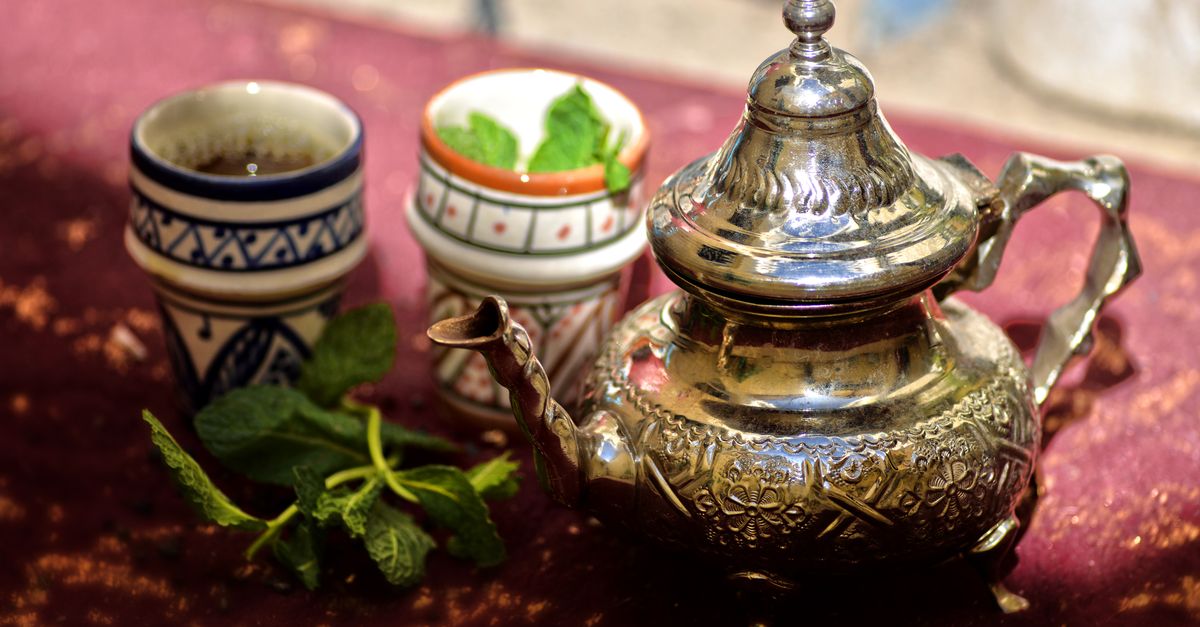
Tea Arrived in Morocco From Somewhere Else
Tea plants, Camellia sinensis, are not native to Morocco. The drink became established there through trade, and its early history is closely connected with European merchants and diplomatic contacts.
Green tea was reaching Moroccan ports by the 17th century. At first, it was an expensive product associated with wealthy households and the royal court. Sultan Moulay Ismail is known to have received tea and sugar from European ambassadors, at a time when these products were still far removed from the everyday kitchen.
Its wider spread came later. During the 19th century, British merchants were looking for new markets for Chinese green tea, and Moroccan ports such as Essaouira and Tangier became important points in that trade. Much of the tea was the type now known as gunpowder tea, with leaves rolled into small pellets.
Moroccans began preparing it with fresh local spearmint and plenty of sugar. That combination proved remarkably durable. What had once been a luxury gradually became something ordinary households could prepare every day.
By the late 19th century, mint tea had moved well beyond the cities and wealthy homes where it had first been associated with status. It had become part of daily life in very different parts of the country.

A Few Ingredients, With Plenty of Variation
The classic version starts with gunpowder green tea, fresh spearmint, sugar and boiling water. The proportions are not necessarily the same everywhere, and that is part of what makes it difficult to describe one single "correct" Moroccan tea.
Gunpowder tea supplies the slightly earthy and bitter base. Fresh na'na, the Moroccan name commonly used for spearmint, brings the sweet herbal smell that most visitors associate with the drink. Sugar softens the bitterness, sometimes quite generously.
The herbs can change too. In winter, sheeba, or wormwood, is sometimes added for a stronger and more bitter taste. Lemon verbena, known as louiza, appears in other preparations, while thyme, sage and scented geranium can be found in regional or seasonal versions.
So a glass served in one house does not necessarily taste exactly like the next one. The basic ingredients are familiar, but family habits and local availability leave their mark.
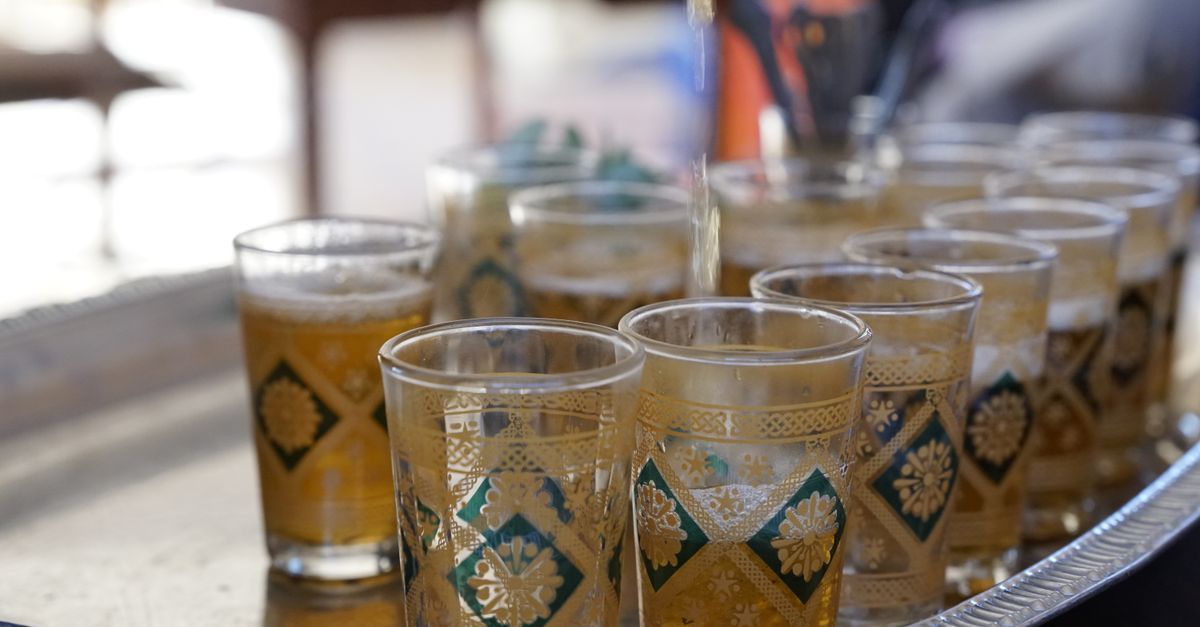
The Pot Is Part of the Ceremony
Preparing Moroccan tea is often something guests watch rather than something that happens hidden away in the kitchen.
Green tea is placed into a traditional berrad, then washed with hot water. The first liquid may be kept aside as the rooh, sometimes translated as the "spirit" of the tea. The leaves are rinsed again before the reserved liquid goes back into the pot.
Fresh mint and sugar are added, followed by more hot water. Depending on the household and the preparation, the pot can be heated again so that everything comes together.
Then the tea is poured into a glass and returned to the pot several times. The stream may fall from quite a height, creating the layer of foam seen on the surface of a properly poured glass.
It is an uncomplicated movement once you know how to do it, but it gives the preparation a rhythm. The pot, the glasses and the repeated pouring become part of the occasion rather than merely tools for making a drink.
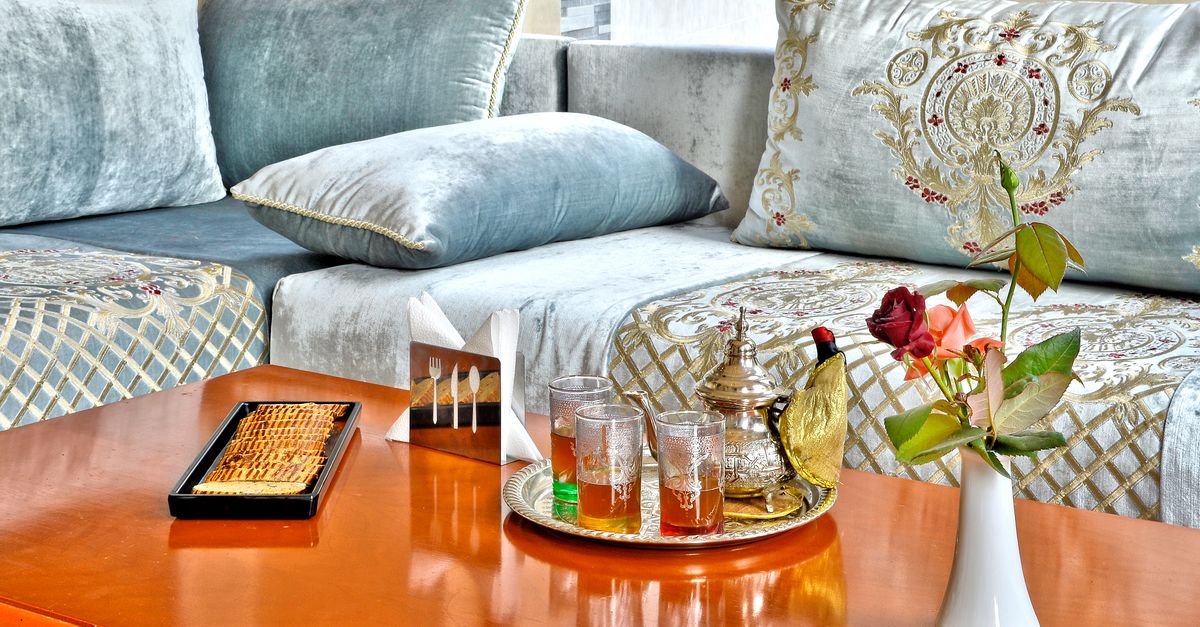
When Someone Offers You Tea
For travelers, the social side of tea is often easier to notice than its history. A shopkeeper may offer a glass while you are looking at carpets or ceramics. A family may serve it during a visit. In a café, it can simply be something people sit with while talking.
Accepting a glass is generally a polite response to an offer of hospitality. You do not have to finish three glasses every time, despite the familiar saying about the first being gentle like life, the second strong like love, and the third bitter like death.
The small glasses are usually served without handles and can be extremely hot. Taking your time with the first sip is probably more useful than trying to imitate the quick movements of someone who has been drinking tea this way all their life.
Sugar is another point where visitors sometimes discover that their preferences are different from those of the person making the tea. If you want very little sugar or none at all, saying so before the pot is prepared is much easier than trying to change the drink afterward. Bila sukkar means without sugar, while shwiya d-sukkar means a little sugar.

The Tea Changes as the Landscape Changes
Traveling through Morocco makes the regional differences easier to appreciate. The ingredients remain recognizable, but the strength of the tea, the herbs and the way it is presented can shift from one area to another.
Along the northern coast, particularly around Tangier and Tetouan, tea is often very sweet and heavily scented with fresh mint. Some northern preparations are also served with roasted pine nuts.
In Fes and Meknes, tea can be presented with more elaborate silverware, especially when it is being served on a formal occasion. Orange blossom water, or ma zhar, is sometimes used to give the drink a floral note.
In the High Atlas, local herbs have a practical place in the tradition. Thyme, mountain mint and lemon verbena can appear alongside or instead of the usual cultivated spearmint, particularly during colder weather.
Further south, the ritual can become slower again. In places such as Merzouga and Zagora, tea may be brewed over charcoal and poured repeatedly between glasses. The darker brew and large amount of foam give southern preparations a noticeably different appearance.
Tea Beyond the House
Some of the most ordinary tea moments happen in places that are not associated with formal ceremonies at all.
Walk through a Moroccan souk and a cup may appear while a conversation about a rug or a piece of pottery is taking place. The tea is not necessarily a sales tactic with a hidden obligation attached to it. Often it is simply the way the conversation is conducted.
Cafés have their own version of the same habit. A glass of tea can sit on the table for quite a while, especially when there is nowhere particular to be and the street outside is more interesting than the clock.
Ordering a berrad d'atay can therefore become a longer pause than expected. The tea arrives, the conversation continues, and the drink becomes almost secondary to the time spent around it.
Making the Tea Outside Morocco
The ingredients are not difficult to find. Gunpowder green tea and fresh spearmint are the main things to look for, and fresh mint makes a noticeable difference compared with peppermint tea bags.
The proportions can be adjusted according to taste. Some people prefer a stronger tea, others more mint, and the amount of sugar can be reduced considerably from the very sweet traditional versions.
The pouring technique takes a little practice. The tea is traditionally moved between the pot and a glass several times before serving, partly to mix the ingredients and partly to create the foam on top.
Even when prepared in another country, those few details are enough to make the drink feel recognizably Moroccan.
More Than a Recipe
Moroccan mint tea began as an imported drink, but it no longer feels foreign to the country at all. Generations of preparation have given it a place in homes, cafés, shops and social gatherings across Morocco.
The ingredients explain only part of its importance. The rest is found in the way the pot is prepared, the glasses are poured and people remain at the table a little longer than they might have otherwise.
That may be the simplest way to understand atay: not as a single recipe followed everywhere in exactly the same way, but as a familiar part of Moroccan life that has changed with the people and places around it.
