
Stepping into the historic medina of Marrakech is an immediate sensory experience. A vast UNESCO World Heritage site threaded with thousands of narrow alleyways, the medina houses one of Northern Africa's most famous market networks. The souks of Marrakech are not a single monolith, but rather a collection of specialized micro-markets where artisans have crafted and traded goods for nearly a millennium. From hand-forged brass lanterns casting shadow patterns on stone walls to mountain-harvested spices arranged in vibrant mounds, exploring these markets offers an unmatchable window into Moroccan craft traditions and daily commercial life.
Navigating this labyrinth effectively requires understanding how the souks are laid out, what items are genuine local specialties, and how to participate in the local culture of price negotiation. Whether you are searching for hand-knotted Amazigh rugs, supple leather babouche slippers, or fragrant culinary spices, this comprehensive guide provides the practical strategies and cultural background needed for a rewarding journey through Marrakech's iconic medina markets.

The Structure and Layout of Marrakech's Souk Network
To the uninitiated, the souks can feel like a disorienting maze. However, the market system follows a logical guild-based arrangement dating back to medieval times. Traditionally, high-value, clean trades such as silk weavers, herbalists, and precious metal artisans operated closest to the central Ben Youssef Mosque, while noisier or more odorous crafts—like blacksmithing and leather tanning—were located further out toward the medina walls.
While modern commerce has blurred some boundaries, distinct specialized zones remain active throughout the central medina north of Jemaa el-Fnaa square:
- Souk Semmarine: The primary covered artery leading north from Jemaa el-Fnaa. It features broad covered passageways filled with high-end carpet showrooms, leather goods, embroidered garments, and souvenirs.
- Souk El Kebir & Souk Cherratine: Specialized quarters dedicated primarily to high-quality leather goods, bookbinding, and tailored traditional clothing.
- Souk Haddadine: The ironworkers' quarter, where the rhythmic sound of hammers ringing against anvils announces a maze of metal workshops producing lanterns, mirrors, and wrought-iron furniture.
- Souk Chouari: The woodworkers' and basketry sector, dominated by the fragrant scent of cedarwood and rows of hand-woven palm frond baskets.
- Souk des Teinturiers: The dyers' market, famous for vivid skeins of freshly dyed wool and silk hung high overhead across alleyways to dry in the sunlight.

Top Signature Items to Buy in the Marrakech Souks
The artisan traditions of Morocco are heavily tied to specific raw materials, regional tribal styles, and generational trade secrets. Recognizing quality craftsmanship ensures you select pieces that last long after your trip.
1. Handcrafted Leather Goods and Babouches
Marrakech has been famous for tanneries and leather craftsmanship since the Almoravid dynasty. Look for supple goat leather or calfskin items including leather duffel bags, satchels, poufs (ottomans), and traditional flat-heeled leather slippers known as babouches (or balgha in Arabic). High-quality leather should have a soft hand-feel and a natural, rich aroma rather than a harsh chemical odor, indicating traditional vegetable tanning techniques.
2. Moroccan Rugs and Flat-Weaves
Carpet shops are abundant throughout Souk des Tapis (Criée Berbère). You will encounter both thick-pile high-Atlas Amazigh wool rugs (such as Beni Ourain or Azilal styles) and lightweight, flat-woven Kilims or recycled-textile Boucherouite rugs. When inspecting rugs, flip the piece over to check knot density on the backside; handmade wool carpets feature organic variations in knot spacing and natural dye tones.
3. Spices, Argan Oil, and Natural Cosmetics
Spices in Marrakech are valued for both culinary and medicinal uses. Essential purchases include pure saffron from Taliouine, wild desert cumin (Cumin de Sahra), fragrant pink rosebuds from El Kelaa M'Gouna, and the iconic Moroccan spice blend Ras el Hanout. For cosmetics, look for cold-pressed 100% pure Argan oil (which should carry a light nutty aroma and gold tint), black soap (Savon Noir) paired with a traditional Kessa exfoliating glove, and natural terracotta lipstick discs (Aker Fassi).
4. Brass and Copper Metalware
From pierced brass pendant lights that throw complex geometric patterns to hand-engraved silver-nickel tea trays, Moroccan metalwork is exceptionally detailed. Examine metal items for solid weight, smooth seams, and hand-chiseled detailing rather than thin stamped metal sheet construction.
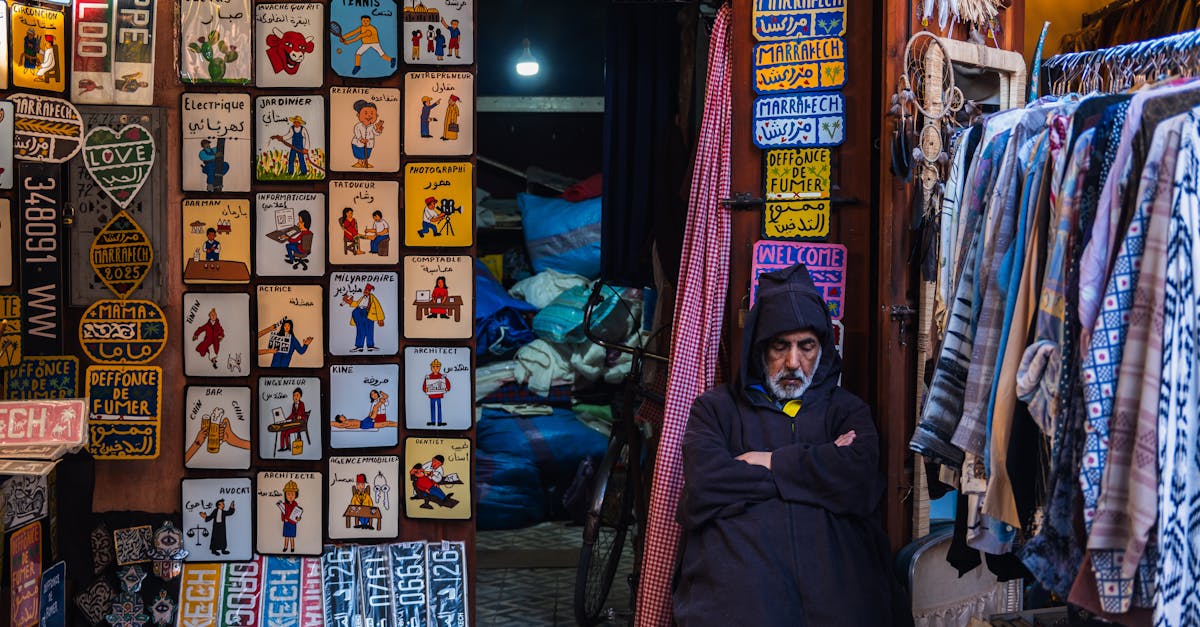
The Art of Bargaining: Etiquette and Negotiation Tactics
In Western retail contexts, fixed pricing is standard, but in the traditional souks of Marrakech, bargaining (known as Moussawama) is a social custom based on personal interaction, mutual respect, and patience. It is helpful to view price negotiation not as a conflict, but as a conversation.
Step 1: Understand the Market Price Baseline
Before making significant purchases, browse several stalls without committing to buy. Visiting fixed-price artisan centers—such as the Ensemble Artisanal on Avenue Mohammed V just outside the medina wall—provides a clear baseline for standard market values and craftsmanship quality levels.
Step 2: Let the Vendor Name the Initial Price
When you find an item you wish to purchase, ask for the price (
