
Choosing where to stay in Fez is one of the most critical decisions when planning a trip to Morocco's cultural capital. Unlike modern coastal cities, Fez is divided into sharply contrasting districts: Fes el-Bali, the ancient car-free medina; Fes el-Jdid, the 13th-century Royal Quarter; and Ville Nouvelle, the modern city center developed during the French protectorate era. Each neighborhood offers a distinctly different travel experience, logistical reality, and style of accommodation.
For first-time visitors, the main choice usually comes down to staying in a restored traditional courtyard home (a riad or dar) deep within the ancient medina or opting for a contemporary hotel in the modern new city. This guide breaks down the best neighborhoods, explains the practical logistics of navigation and luggage transport, and provides concrete recommendations to help you select the ideal base for your itinerary.

Fes el-Bali: The Historic Heart of the Medina
Fes el-Bali is the largest contiguous car-free urban area in the world and a UNESCO World Heritage site. Home to the legendary University of al-Qarawiyyin, ancient leather tanneries, and thousands of winding alleyways, staying here places you directly inside the historic atmosphere of medieval Fez.
Why Stay in Fes el-Bali?
If you want step-out-the-door access to historical landmarks, traditional artisan workshops, local food stalls, and rooftop views over minarets and ancient skylines, Fes el-Bali is unrivaled. Most accommodations here are traditional houses centered around internal courtyards, offering quiet sanctuaries away from the vibrant street traffic.
Drawbacks and Challenges
Fes el-Bali is entirely car-free. Taxis and private cars cannot enter the narrow alleys, meaning you must walk to your accommodation from the nearest perimeter city gate. Navigating the alleys with luggage can be difficult, and finding your riad for the first time without guidance can be challenging.
- Best suited for: First-time visitors seeking an immersive cultural experience, couples, photographers, and heritage enthusiasts.
- Avoid if: You have severe mobility limitations, require vehicle drop-off directly at your hotel door, or prefer standardized modern western-style hotel rooms.
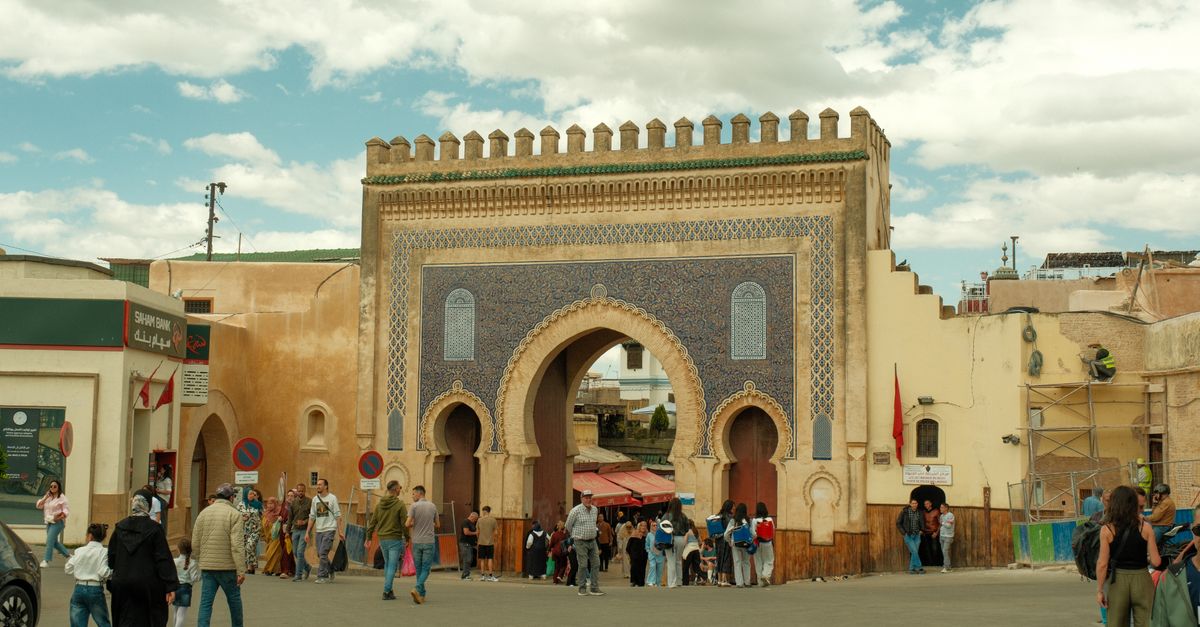
Bab Bou Jeloud (The Blue Gate): Best Area for First-Timers
The western gateway to Fes el-Bali, known as Bab Bou Jeloud, is widely considered the best specific location for first-time visitors staying in the medina. This bustling plaza serves as the main bridge between the old city and modern transport networks.
Location and Practical Advantages
Staying near Bab Bou Jeloud minimizes the typical stress of navigating the medina. Taxis can drop passengers off right at the gate plaza. From there, most riads in the immediate vicinity are within a 2- to 5-minute walk along relatively wide, well-lit main thoroughfares like Tala'a Kebira or Tala'a Seghira.
The area surrounding Bab Bou Jeloud is packed with open-air cafes, informal local restaurants, convenience shops, and official guides. Because of its constant activity and high visibility, returning to your accommodation late in the evening is straightforward and safe.
- Accessibility: Excellent relative to the rest of the medina; minimal stairways and short walking distance from taxi ranks.
- Vibe: Lively, energetic, heavily focused on tourism and dining, easy to navigate.
Batha and Ziat: Quiet Medina Neighborhoods with Easy Access
For travelers who want to experience the charm of the medina without the non-stop noise and foot traffic of Bab Bou Jeloud, the Batha and Ziat districts on the southwestern edge of Fes el-Bali offer a quieter, refined alternative.
Neighborhood Atmosphere
Batha is centered around Place Batha and the historic Batha Museum. It functions as another crucial transport hub where petit taxis can drop off passengers. Ziat lies just south of Batha and features grander, historically wealthy residential homes converted into spacious boutique riads.
Why Choose Batha or Ziat?
These areas feature wider residential streets and fewer aggressive shopkeepers while remaining within a 10- to 15-minute walk from major medina sights. Luggage transfers are significantly easier here because vehicle parking and drop-off points are close to many property front doors.
- Best suited for: Families, slow travelers, mature visitors, and those seeking peaceful evenings without leaving the historic walls.
- Proximity: Easy walking access to both the medina interior and outer road networks via Place Batha.
Fes el-Jdid and the Mellah: History and Mid-Way Logistics
Constructed in the 13th century under the Marinid dynasty, Fes el-Jdid ("New Fez", relative to the 9th-century Fes el-Bali) houses the grand Royal Palace (Dar al-Makhzen) and the historic Jewish Quarter, known as the Mellah.
Atmosphere and Attractions
The Mellah is characterized by its distinctive architecture, featuring open balconies overlooking streets rather than the inward-facing privacy of traditional Muslim domestic architecture. The area features historic synagogues, the Jewish Cemetery, and vibrant markets.
Accommodation Realities
Fes el-Jdid offers a smaller selection of accommodations compared to Fes el-Bali, primarily consisting of guesthouses and budget-friendly traditional homes. It serves as a good middle ground for travelers who want historic character while remaining slightly closer to the open avenues connecting to Ville Nouvelle.

Ville Nouvelle: Modern Comfort and Car Access
La Ville Nouvelle (New Town) was constructed during the French colonial period in the 20th century. Designed with broad tree-lined avenues, European-style street cafes, modern administrative buildings, and formal park plazas like Jardin Jnan Sbil on its boundary, it offers a stark visual and practical contrast to the ancient medina.
Why Stay in Ville Nouvelle?
Ville Nouvelle is the practical choice for travelers who prioritize international hotel standards, direct vehicle drop-offs, elevator access, swimming pools, and modern amenities. It is also the central business hub, featuring modern banks, chain supermarkets, modern pharmacies, and international cuisine choices.
Transport and Convenience
The central train station (Gare de Fès-Ville) is located directly within Ville Nouvelle, making this district ideal for travelers arriving by rail or departing early for destinations like Meknes, Rabat, or Marrakech. Red "petit taxis" run constantly between Ville Nouvelle and the medina gates (such as Bab Bou Jeloud or Bab Rcif); the trip takes roughly 10 minutes and costs a metered fare.
- Best suited for: Business travelers, visitors with significant mobility limitations, self-drive road trippers needing secure parking, and travelers who prefer modern hotel chains.
- Trade-off: You will lack the immediate historic charm of the medina and will need to take a taxi or bus every day to visit major cultural sites.
Understanding Fez Accommodation: Riads vs. Hotels
Choosing the right neighborhood goes hand-in-hand with choosing the right building style. In Fez, accommodation generally falls into two distinct categories.
What is a Riad or Dar?
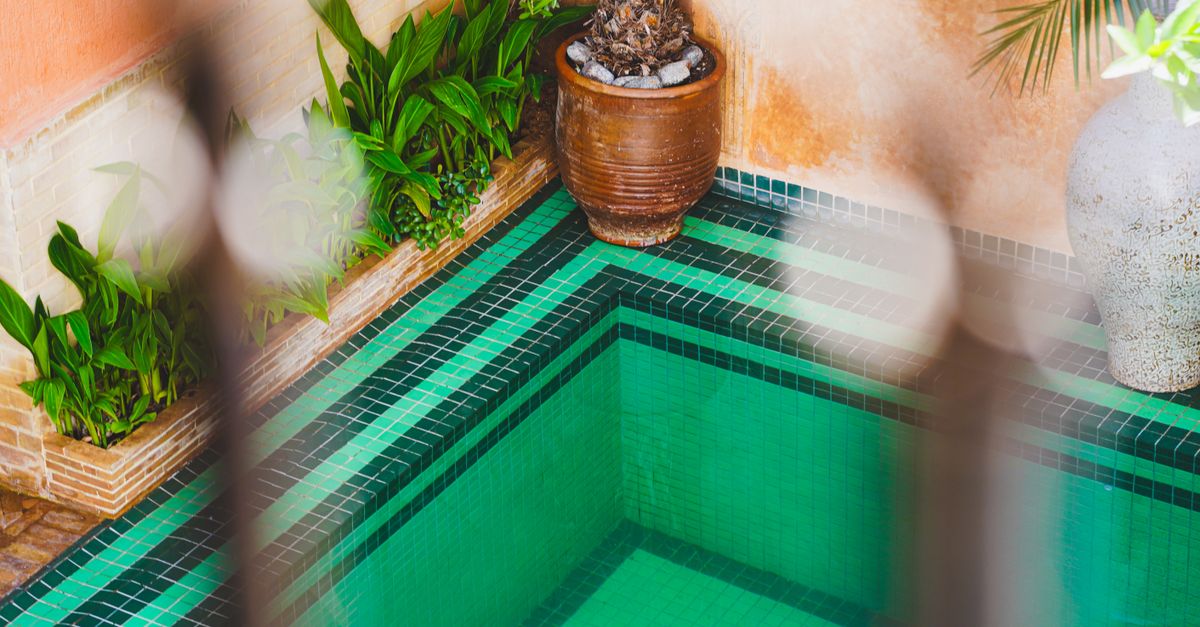
A riad is a traditional multi-story urban mansion built around a central interior garden or courtyard. A dar is similar in structure but typically smaller, built around a central tiled courtyard without trees or gardens. Key characteristics include:
- Inward-Facing Focus: Rooms rarely have outer windows facing the street; instead, windows and doors open onto the central atrium. This keeps the interior remarkably cool during hot summer days and quiet from street noise.
- Intricate Craftsmanship: Traditional Fez riads showcase signature Moroccan arts: hand-carved cedarwood ceilings, intricate zellige tilework, sculpted plasterwork (stucco), and central fountains.
- Personalized Service: Most riads operate as small boutique guesthouses with between 4 and 10 rooms. Staff generally provide personalized hospitality, home-cooked breakfasts, and individual assistance with local guides.
Modern Hotels
Located almost exclusively in Ville Nouvelle or along the perimeter ring roads outside the medina walls, modern hotels offer familiar international features. They provide standardized room layouts, 24-hour reception desks, soundproof windows, multi-passenger elevators, on-site parking garages, and large swimming pools.
Neighborhood and Accommodation Comparison
| Neighborhood | Primary Housing Type | Vehicle Access | Noise / Vibe | Ideal Traveler |
|---|---|---|---|---|
| Bab Bou Jeloud | Riads / Dars | Near gates only (2-5 min walk) | Lively, bustling, convenience-focused | First-time visitors, short stays |
| Batha / Ziat | Boutique Riads | Good access points (5-10 min walk) | Peaceful, residential, historic | Families, slow travelers, couples |
| Ville Nouvelle | Modern Hotels | Direct front-door access | Urban city traffic, modern European | Business travelers, mobility limitations, self-drivers |
| Fes el-Jdid | Budget Dars / Guesthouses | Moderate perimeter access | Active local market life | Budget travelers, history enthusiasts |

Practical Tips for First-Time Guests in Fez
Navigating accommodation in Fez involves several practical steps that differ significantly from western destinations. Keeping these points in mind will ensure a smooth check-in experience.
1. Arrival and Luggage Porter Etiquette
If staying in the medina, coordinate your arrival time with your riad beforehand. Most riads will send a staff member or an authorized luggage handler (often equipped with a handcart) to meet your taxi at the nearest gate (such as Bab Bou Jeloud or Bab Rcif). Agree on porter tips beforehand—typically 20 to 50 Moroccan Dirhams (MAD) depending on distance and amount of luggage.
2. Winter and Summer Climate Considerations
Fez experiences extreme seasonal temperature swings. Summers (July–August) frequently exceed 40°C (104°F), while winter nights (December–February) can drop near freezing. Traditional stone riads absorb heat in summer and cold in winter.
- Summer Travel: Ensure your accommodation specifically offers modern, individually controlled air conditioning in the bedroom.
- Winter Travel: Verify that heating is provided (either built-in split-system heating units or portable space heaters). Thick stone riads without heating can feel uncomfortably damp and cold during winter months.
3. City Tourist Taxes and Payment Realities
Morocco charges a local city/tourist tax (Taxe de Séjour Communale) on hotel and riad stays, usually ranging between 10 to 30 MAD per person per night, depending on the accommodation classification. This fee is often collected separately in cash upon checkout, even if you prepaid your room booking online. Credit card processing can be limited in small guesthouses; keep adequate cash in Dirhams for local taxes, meals, and porter tips.
4. Respecting Local Culture and Etiquette
When staying in historic neighborhoods like Fes el-Bali, remember that these areas are active residential communities, not museum sets. Dress modestly when walking through residential alleys (covering shoulders and knees is appreciated), ask permission before photographing local artisans up close, and maintain modest noise levels on riad roof terraces late at night, as sound carries easily across medina rooftops.
Local Culture & Food near Your Stay
Where you stay heavily influences your dining and cultural options. In Fes el-Bali, culinary life revolves around traditional Moroccan street stalls and riad dining rooms. A signature dish to try in Fez is Pastilla (B'stilla), a savory-sweet pie featuring spiced poultry cooked with saffron, almonds, cinnamon, and sugar, wrapped in paper-thin warqa pastry. Traditionally reserved for special occasions, weddings, and celebratory family meals, visitors can easily find pastilla served during lunch and dinner hours in local medina restaurants and traditional riad dining rooms around Bab Bou Jeloud.
Riads frequently offer home-cooked multi-course dinners on request, which typically require advance booking by mid-morning so staff can purchase fresh ingredients from the neighborhood souk that afternoon. If staying in Ville Nouvelle, dining choices skew toward French bistros, pizzerias, modern Moroccan cafes, and international chains.
Major Attractions & Key Sights
Staying in Fez places you near some of Morocco's most historic landmarks. Here is what to know when visiting:
Chouara Tannery
Why visit: The largest and oldest of the traditional leather tanneries in Fez, operating since medieval times using traditional dyeing methods.
Practical details: Located deep inside Fes el-Bali. Best visited in the morning when active washing and dyeing occur and odor is less intense in summer heat. Allow about 45–60 minutes. Access is typically through surrounding leather shops overlooking the terraces; mint leaves are provided to mask the smell. Suitable for families, though children should be prepared for strong odors. Beware of unrequested self-appointed guides offering tours around the perimeter.
University of al-Qarawiyyin
Why visit: Recognized by UNESCO and the Guinness World Records as the oldest continually operating institution of higher learning in the world, founded in 859 AD by Fatima al-Fihri.
Practical details: Located at the core of Fes el-Bali. Non-Muslim travelers cannot enter the active mosque area, but stunning views of the central courtyard, intricate tilework, and carved wood can be glimpsed from the open entrance doors. Duration is roughly 15–20 minutes. Nearby attractions include the Place Seffarine coppersmith market.
Final Decision Guide: Where Should You Stay?
To finalize your accommodation choice, evaluate your travel style against these practical profiles:
- Choose Bab Bou Jeloud (Fes el-Bali) if you have 24 to 48 hours in Fez, want immediate access to key sights, and prefer an easy, central entrance point to the medina.
- Choose Batha or Ziat (Fes el-Bali) if you are staying three days or longer, want authentic riad architecture, and value quiet surroundings and relaxed evening returns.
- Choose Ville Nouvelle if you are traveling with heavy luggage, driving a rental car, require reliable elevator access, or prefer modern corporate hotel standards near the rail station.
