
When the Christian Reconquista culminated in the fall of the Emirate of Granada in 1492 and the subsequent expulsion of the Moriscos in 1609, tens of thousands of Andalusian Muslims and Sephardic Jews crossed the Strait of Gibraltar. Carrying keyrings to lost homes in Córdoba, Seville, and Granada, these refugees brought far more than memories across the sea. They transplanted an entire civilization—its architectural genius, agricultural knowledge, courtly music, refined culinary techniques, and urban sophistication—into the fertile hills and coastal valleys of Northern Morocco.
Today, this profound cultural cross-pollination remains alive across northern and central Morocco. From the whitewashed courtyards of Tetouan to the azure alleys of Chefchaouen, the ancient quarters of Fes, and the coastal citadel of Rabat, the Andalusian legacy is not merely preserved in museums; it is lived daily through music, craft, language, and food. For travelers seeking a deeper understanding of the Western Islamic world, exploring Morocco's Andalusian heritage offers an extraordinary journey through shared memory and architectural brilliance.

The Historic Waves: From the Fall of Granada to the Final Expulsion
The movement of populations between the Iberian Peninsula and North Africa occurred in successive historical waves over several centuries. The earliest significant migrations began as early as the 9th century, when exiled families from Córdoba settled in Fes, founding the famed Andalusian Quarter (Adwat al-Andalous). However, the most transformative arrivals took place between the late 15th and early 17th centuries.
Following the fall of Granada in 1492, noble families, scholars, artisans, and merchants fled to northern Morocco. They settled primarily in Tetouan, which was rebuilt from ruins under the leadership of Sidi Ali al-Mandri, an Andalusian commander who fled Granada. A century later, King Philip III's decrees of expulsion between 1609 and 1614 forced over 300,000 Moriscos out of Spain. Many settled in Rabat, Salé, Chefchaouen, and Tangier, bringing advanced urban planning, military engineering, and agricultural irrigation techniques with them.
Tetouan: The 'Daughter of Granada' and Architectural Jewel
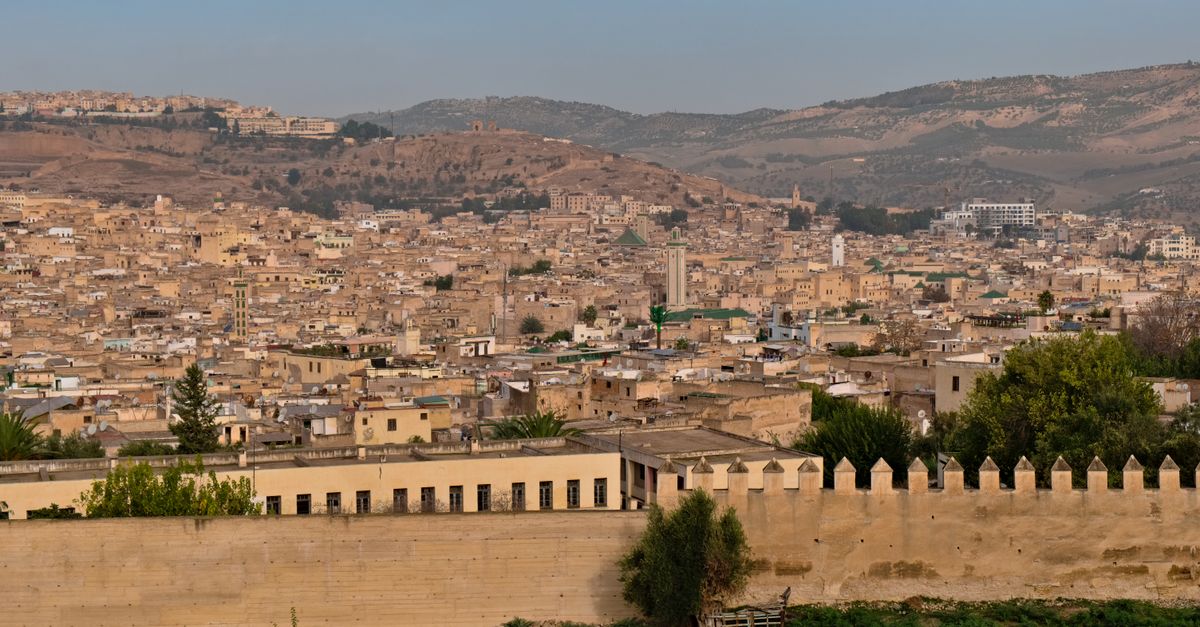
Tetouan is perhaps the most direct living descendant of Muslim Spain in Morocco. Reconstructed in the late 15th century specifically to house Granada refugees, the medina of Tetouan—a UNESCO World Heritage Site—is a masterclass in Hispano-Moorish architecture.
Why Visit
Unlike the bustling commercial centers of Marrakech or Fes, Tetouan remains an authentic city where Andalusian culture is palpable in daily life. Its UNESCO-listed medina is one of the most complete in Morocco, surrounded by historic ramparts and punctuated by seven monumental gates.
What to See and Do
Explore the Mellah (the historic Jewish quarter) and the main medina arteries. Visit the Ethnographic Museum located near Bab El Oqla, which showcases traditional Andalusian-Moroccan textiles, tilework, and musical instruments. Stroll through the Ensanche, the Spanish colonial neighborhood adjoining the medina, where early 20th-century architectural styles bridge the historic Hispano-Moorish aesthetic with modern urbanism.
Practical Information
- Best Time to Visit: April to June, or September to October, when temperatures are pleasant for walking.
- Realistic Visit Duration: 1 to 2 full days.
- How to Get There: Tetouan is accessible via Saniat R'mel Airport (SAN) or via regular regional buses and grand taxis from Tangier (approx. 1 hour) or Chefchaouen (approx. 1.5 hours).
- Entry Fees & Budget: Access to the medina is free. Local museums typically charge nominal entrance fees (around 10 to 20 MAD). Official guides are recommended for first-time visitors.
- Family Suitability: Excellent for families. The medina is pedestrian-only and relatively manageable to navigate compared to larger imperial cities.
- Practical Caution: Navigation in the medina can be confusing without a map; consider hiring an official tourist guide at the tourist office near Place Moulay El Mehdi for structured navigation.
Chefchaouen: The Mountain Fortress Built by Andalusian Exiles
Perched high in the Rif Mountains, Chefchaouen was founded in 1471 as a small fortress (Kasbah) by Moulay Ali Ben Rachid to defend against Portuguese invasions. However, its character was shaped significantly by Andalusian refugees who expanded the town into a sanctuary of refuge.

Why Visit
Chefchaouen’s blue-washed buildings, reddish-brown tile roofs, and steep winding stairways mirror the mountain villages of Andalusia (such as those in the Alpujarras region near Granada). Beyond its famous aesthetic, it represents a preserved highland urban landscape born out of exile.
Key Sites
The central square, Outa el-Hammam, is dominated by the restored 15th-century red-brick Kasbah, which houses a serene garden, historical museum, and gallery space. Hike up to the Spanish Mosque on the hill overlooking the city for panoramic views of the valley and Andalusian-style rooflines.
Practical Information
- Best Time to Visit: Spring (March–May) and Autumn (September–November) offer clear mountain air and mild walking conditions.
- Realistic Visit Duration: 1 to 2 days.
- How to Get There: CTM buses connect Chefchaouen directly from Tangier (approx. 3 hours), Tetouan (1.5 hours), and Fes (4–5 hours).
- Costs: Kasbah entrance fee is approximately 60 MAD for international visitors. Accommodation ranges from budget guesthouses to boutique riads.
- Family Suitability: Good, though parents with strollers should be prepared for numerous cobblestone steps and steep inclines.
- What to Avoid: Avoid unofficial street guides offering hiking trips or drug solicitation near the medina outskirts. Stick to official guides or self-guided walks.
Fes el-Bali: The Ancient Andalusian Quarter (Adwat al-Andalous)
Long before the 15th-century exiles, Fes received an early wave of thousands of Andalusian families in 818 CE after an uprising against the Umayyad Emirate in Córdoba. Sultan Moulay Idriss II settled them on the eastern bank of the Fes River, creating Adwat al-Andalous (The Andalusian Quarter).

Why Visit
Fes el-Bali represents the intellectual and artistic heart of Andalusian-Moroccan synthesis. Here, the Andalusian refugees established mosques, madrasas, and artisan guilds, laying the foundation for Morocco's craft traditions.
Key Sites
The grand centerpiece of the quarter is the Andalous Mosque, established in 859–860 CE, featuring an iconic green-and-white minaret and carved cedarwood entryways. Nearby sits the 14th-century Sahrij Madrasa, famous for its central water basin and carved stucco and zellige (mosaic tilework).
Practical Information
- Best Time to Visit: October to April to avoid intense summer heat in the inland basin.
- Realistic Visit Duration: Spend half a day specifically exploring the eastern bank (Adwat al-Andalous), within a broader 2–3 day stay in Fes.
- How to Get There: Fes is served by Fes-Saïss Airport (FEZ) and high-speed Al Boraq/conventional ONCF trains. Access the quarter on foot via Bab Ftouh or Bab Guissa.
- Family Suitability: Fes el-Bali is vast and intensely busy; keep young children close as narrow alleys are shared with pack animals and handcarts.
Rabat and Salé: The Hornacheros and the Republic of Bou Regreg
In the early 17th century, a specialized group of Morisco refugees from the Spanish town of Hornachos settled in the historic Kasbah of the Udayas in Rabat. Skilled in maritime navigation and military defense, these exiles established a semi-independent corsair republic known as the Republic of Bou Regreg (1627–1668).

Why Visit
Rabat displays a unique coastal manifestation of Andalusian design. The Kasbah of the Udayas features blue-and-white residential streets, dramatic ocean views, and the manicured Andalusian Gardens, designed during the French Protectorate era using traditional Hispano-Moorish botanical layouts.
Key Sites
Walk through the monumental stone gateway of Bab Oudaia into the peaceful residential quarter. Visit the historic Andalusian Garden inside the Kasbah walls, filled with orange trees, bougainvillea, and stone irrigation channels. Nearby, the historic medina wall along Avenue Hassan II was constructed by Morisco refugees in the 17th century.
Practical Information
- Best Time to Visit: Year-round, thanks to coastal Atlantic breezes.
- Realistic Visit Duration: 1 full day for Rabat's historic quarters.
- How to Get There: Rabat is easily reached via the high-speed Al Boraq train from Tangier (1 hour 20 minutes) or Casablanca (45 minutes).
- Costs: Free access to the Kasbah and Andalusian Garden.
- Family Suitability: Excellent. The garden is enclosed and safe, and the wide pedestrian paths are easy to navigate.
Cultural Legacy: Music, Craftsmanship, and Daily Etiquette
Classical Music: Al-Ala
One of the most profound legacies of Al-Andalus in Morocco is Tarab Al-Ala (classical Andalusian music). Developed by legendary musician Ziryab in 9th-century Córdoba, this classical court music was preserved exclusively in North Africa after the fall of Spain. Performed using instruments like the oud, rabab (bowed lute), violin, and hand drums, it is structured into rhythmic suites called nūbāt. You can hear this music live during cultural festivals in Tetouan, Fes, and Chefchaouen, as well as during formal gatherings and weddings.
Master Craftsmanship
Andalusian artisans introduced superior techniques in:
- Zellige: Geometric mosaic tilework refined through advanced mathematical proportion.
- Stucco (Tarrak): Intricate plaster carving used in medina homes and madrasas.
- Wrought Iron & Woodworking: Decorative window grills, studded wooden doors, and painted wood ceilings (zouak).
Culture & Etiquette
Northern Moroccan urban culture values hospitality, discretion, and quiet respect in residential medina alleys. When photographing residential doorways or private courtyards in Tetouan or Chefchaouen, always ask permission first (
