
Known affectionately as the 'White Dove' (La Paloma Blanca), Tetouan holds a singular position in Morocco’s cultural geography. Perched near the Mediterranean coast beneath the dramatic peaks of the Rif Mountains, this historic city is the country's most authentic bridge to medieval Islamic Spain. Following the fall of Granada in 1492 and the subsequent expulsion of the Moriscos in the early seventeenth century, thousands of Andalusian refugees resettled in Tetouan, rebuilding a city that had been destroyed decades earlier. They did not merely settle here; they reconstructed the urban space, domestic architecture, and cultural institutions in the direct image of their lost homes in Granada, Cordoba, and Seville.
Today, Tetouan’s UNESCO World Heritage-listed Medina remains the most complete and best-preserved historical center of Hispano-Moorish culture in North Africa. Unlike Fes or Marrakech, which were forged primarily by dynastic Moroccan rulers, Tetouan was built by Andalusian exiles and expanded during the Spanish Protectorate era (1912–1956). The result is a living repository of refined urbanism, distinct classical music, aristocratic culinary traditions, and artisanal masterworks that continue to shape daily life for the city's old families.

The Living Legacy of Al-Andalus in Tetouan
The story of modern Tetouan begins with Sidi Ali Al-Mandri, an Andalusian noble and military leader who fled Granada shortly before its final capitulation to the Catholic Monarchs. Granted permission and backing by the Wattasid Sultan of Fes, Al-Mandri re-established Tetouan in the late fifteenth century as a fortified stronghold for Andalusian refugees. Subsequent waves of Morisco deportees in 1609 brought skilled artisans, scholars, merchants, and agricultural specialists, who infused the town with sophisticated irrigation techniques, refined textile weaving, and unique architectural design.
This historical influx established a distinct social hierarchy and cultural identity that endures today. Tetouani families of Andalusian origin have carefully preserved their ancestral lineages, family trees, and in some cases, symbolic iron keys to their long-lost estates in Granada and Andalusia. The city’s dialect incorporates hundreds of archaic Spanish and Mozarabic loanwords, and its social customs retain a understated elegance that contrasts noticeably with other regional centers in Morocco.
Architectural Signatures of Andalusian Tetouan
Walking through Tetouan’s Medina offers an immediate lesson in Hispano-Moorish urban planning. Unlike interior Moroccan cities where buildings are characterized by blind exterior walls and windowless facades, Tetouan’s traditional homes (known locally as riads or dars) feature subtle exterior windows guarded by intricate wrought-iron grilles (rejas)—a clear architectural signature brought directly from southern Spain.
Key architectural elements to observe throughout the historic quarter include:
- Streets Covered by Vaulted Arches (Sabaat): Narrow residential alleyways bridged overhead by rooms spanning between opposite houses, designed to provide shade, defense, and structural stability.
- Zellij and Painted Wood (Taraj): Tilework utilizing soft Mediterranean color palettes—emerald green, soft cobalt blue, and manganese black—paired with painted wooden ceilings featuring delicate geometric and floral arabesques.
- Symmetry and Interior Courtyards: Central open-air courtyards (patios) adorned with marble fountains, orange trees, and surrounding arcades framed by horseshoe arches.
- Spanish Colonial Extensions (Ensanche): Directly adjacent to the medieval Medina lies the Ensanche district, built during the early twentieth century. Its wide boulevards, whitewashed Neoclassical and Art Deco buildings with forged-iron balconies create a seamless, fascinating transition between medieval and modern Spanish influences.

Key Places to Experience Tetouani-Andalusian Heritage
1. Medina of Tetouan and its Seven Gates
Why visit: The Medina is an pristine example of 15th-to-17th-century Hispano-Moorish urban architecture, compact and completely free of motorized vehicular traffic. It is divided into distinct quarters such as El Ayyoun, Blad, and the historic Jewish quarter (Mellah).
Best time to visit: Morning between 09:30 and 12:30, or late afternoon around 16:30 when the markets are lively but the light is soft against the whitewashed facades.
Visit duration: 3 to 5 hours for an immersive walking tour.
How to get there: Located directly in the city center. Taxis drop passengers off at Place El Mechouar (Place Hassan II) or near Bab El Oqla.
Practical details: Access to the Medina public streets is free. Local, official guides are recommended for first-time visitors to navigate the intricate alleys without getting disoriented. Family friendly, though stroller access is difficult due to occasional steps and cobblestones.
What to avoid: Unofficial guides near Place Hassan II. Respect private residential doorways and ask before photographing shopkeepers.
2. Royal Artisan School (Dar Sanaa)
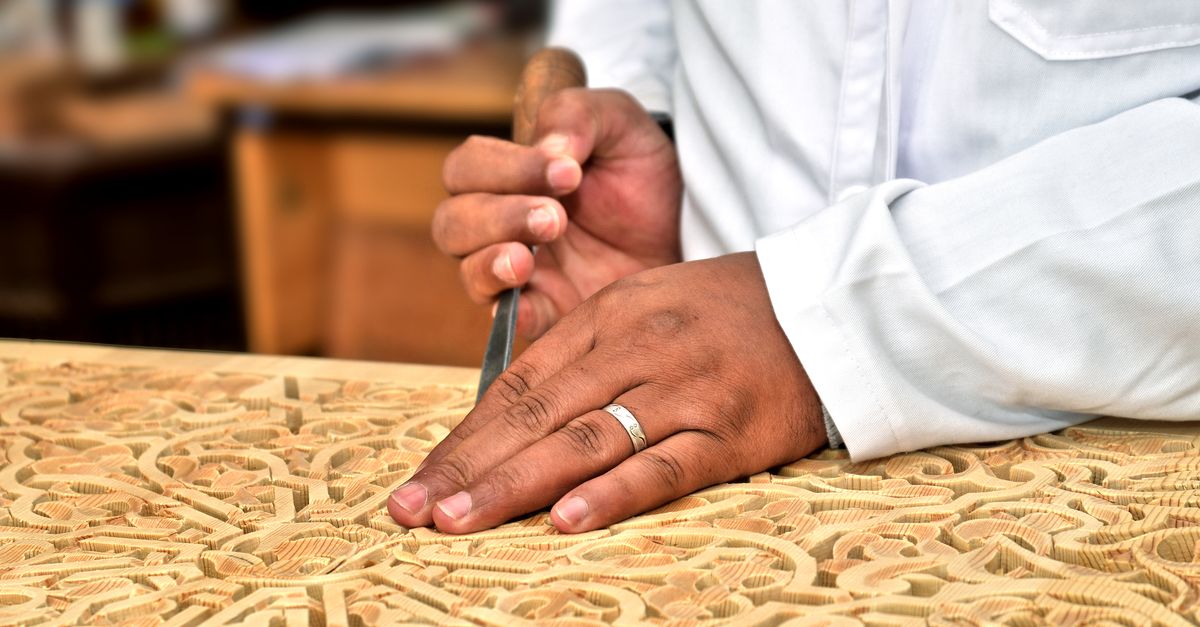
Why visit: Positioned near Bab El Oqla, this institution is fundamental to the preservation of classical Andalusian crafts in North Africa. Founded during the Spanish Protectorate era, students here master centuries-old traditions under master artisans (Maâlems), including carved wood, painted furniture (zouak), brasswork, leathercraft, and mosaic tilework (zellij).
Best time to visit: Weekdays during workshop hours (typically 09:00–12:00 and 15:00–17:00).
Visit duration: 45 minutes to 1.5 hours.
How to get there: Walkable from the main Medina entrance at Bab El Oqla.
Practical details: Standard entry fee is minimal (around 10 to 20 MAD per person, though subject to minor updates). Excellent experience for families with children interested in practical art and history.
3. Tetouan Ethnographic Museum (Bab El Oqla Museum)
Why visit: Housed in a historic bastion fort adjoining Bab El Oqla, this museum showcases the material culture of Tetouani families: traditional wedding attire, elaborate Andalusian jewelry, musical instruments, ceramic tableware, and traditional weapons.
Best time to visit: Late morning.
Visit duration: 1 hour.
How to get there: Located immediately adjacent to the Bab El Oqla gate.
Practical details: Museum tickets are generally around 20 to 30 MAD for adults. Closed on Tuesdays (typical for national museum schedules in Morocco).

4. Place Hassan II (El Mechouar)
Why visit: The historic junction connecting the medieval Medina, the Royal Palace, and the modern Spanish Ensanche. Features striking modernist light towers designed by Spanish sculptor Enrique Nieto.
Best time to visit: Early evening (around 18:00 to 20:00) when local families gather for the traditional evening promenade (Paseo).
Visit duration: 30 to 45 minutes.
5. Quiet Retreats: Saida Al-Horra Square and Zaouias
Why visit: Away from the main commercial arteries lie serene religious sanctuaries (zaouias) and historic plazas dedicated to prominent historical figures like Sayyida al-Hurra, the legendary 16th-century Andalusian queen of Tetouan and naval commander who ruled the western Mediterranean.
Practical caution: Non-Muslims are generally not permitted to enter active religious sanctuaries or zaouias, but the exterior tilework, carved portals, and peaceful surrounding alleys offer profound insight into the city's spiritual fabric.
Living Arts, Music, and Lineages
The heritage of Al-Andalus in Tetouan is not merely preserved in brick and tile; it lives dynamically through performance and personal lineage. The city is considered the capital of classical Al-Ala (Andalusian Classical Music) in Northern Morocco. Originating in medieval Cordoba and Granada, this orchestral music utilizes the oud, violin held vertically on the knee, rabab, and classical Arabic poetry structured in suites called nūbāt.
During major cultural festivals, religious holidays, or traditional weddings, master ensembles perform these suites. Tetouan is also home to specialized conservatories dedicated to maintaining the precise oral transmission of these complex musical scales across generations.
Family structures in Tetouan reflect deep historical roots. Aristocratic families maintain centuries-old heirloom traditions, particularly in textile production. Tetouani embroidery (Terz Tetouani or Taâtraj) is distinct across North Africa: executed on unbleached silk or linen, it features geometric floral patterns in rich hues of brick red, deep gold, and dark blue, used primarily to adorn wedding curtains and ceremonial cushions.
Culture, Etiquette, and Local Nuances
Tetouan retains a relaxed, dignified, and somewhat conservative social atmosphere. Travelers should keep the following cultural practices in mind:
- Language dynamics: While Darija (Moroccan Arabic) is the primary spoken language, Spanish is widely understood and spoken across all generations due to regional history, proximity to Spain, and media influence. French is also used in official and administrative settings.
- Dress code: Modest dress is appreciated out of respect for local customs, particularly when entering residential sectors of the Medina or walking near religious landmarks. Cover shoulders and knees.
- Daily rhythm: Businesses in the Medina often close briefly during the Friday mid-day prayer (12:30–15:00) and take a daily break during the hottest summer hours, reopening late into the evening.
- Paseo tradition: Adopted from Spanish culture, the late-afternoon and early-evening stroll through the Ensanche and Place Hassan II is a beloved daily ritual for families and friends.
The Culinary Heritage of Andalusian Tetouan
Tetouani cuisine represents a delicate marriage between Rif mountain produce, fresh Mediterranean seafood, and royal urban recipes inherited from medieval Islamic Spain. Sweet-and-savory combinations are a hallmark of the local table.

1. Tetouani Pastilla (Pastilla Tétouanaise)
Name & Ingredients: Unlike the Marrakech pastilla (which uses pigeon or chicken with cinnamon and sugar layered together), the authentic Tetouani pastilla features layered poultry cooked with eggs, butter, and saffron, topped with a crisp layer of fried toasted almonds, coated in thin warqa pastry, and finished with a dusting of powdered sugar and cinnamon lines in geometric grid patterns.
Context: Served at major family celebrations, weddings, and formal banquets.
Where to try: Specialty traditional restaurants within the Ensanche or high-end traditional dining halls in the Medina.
2. Fakiya and Halwa Chebakia Tétouanaise
Name & Ingredients: A rich selection of traditional sweets incorporating ground almonds, orange blossom water, honey, and sesame seeds.
Context: Consumed alongside mint tea during afternoon tea gatherings (Asriyah) or late-night family visits.
Where to find: Historic bakeries and pastry shops scattered throughout the Medina's El Blad quarter and along Avenue Mohammed V in the Ensanche.
3. Kalinti (Calentita)
Name & Ingredients: A popular street food dish made from chickpea flour, water, oil, eggs, and seasoned heavily with salt and cumin. Derived directly from the Spanish-Gibraltarian dish Calentita.
Context: Eaten hot as an inexpensive afternoon snack, often served warm inside a fresh piece of crusty baguette with optional harissa chili paste.
Where to find: Small street kiosks and small bakeries around the edge of the Medina and local school districts.
4. Tagine del Hout (Northern Fish Tagine)
Name & Ingredients: Fresh Mediterranean catch (such as sea bass, red mullet, or swordfish) marinated in chermoula (garlic, fresh coriander, cumin, paprika, lemon juice, and olive oil), baked over a bed of sliced potatoes, tomatoes, bell peppers, and preserved lemon.
Context: Typical daily lunch staple, highlighting Tetouan's proximity to the fishing ports of M'diq and Martil.
Where to find: Neighborhood seafood restaurants around the Ensanche and near the bus station area.
Practical Trip Planning
Getting There and Away
Tetouan is situated in northwestern Morocco, making it exceptionally accessible from major regional hubs:
- By Air: Sania Ramel Airport (TTU) operates direct flights from select European cities and domestic flights from Casablanca. Tangier Ibn Battouta Airport (TNG) is roughly 1 hour and 15 minutes away by car.
- By Grand Taxi / Bus: Shared and private grand taxis connect Tetouan frequently to Tangier (approx. 1 hour), Chefchaouen (approx. 1.5 hours), and the coastal towns of M'diq and Fnideq. CTM and Supratours run regular long-distance bus services to all major Moroccan cities.
- By Train: There is no direct train station in Tetouan. The nearest high-speed rail station (Al Boraq) is located in Tangier Ville. From there, take a taxi directly to Tetouan.
Best Season to Visit
Spring (March to May) and Autumn (September to November) offer ideal temperatures (18°C to 24°C) for walking through the Medina and exploring the Rif foothill countryside. Summers (July and August) are warm and humid, attracting large crowds of domestic tourists visiting nearby coastal resorts, while winter (December to February) brings moderate rain and cooler evenings.
Recommended Time Needed
A minimum of 2 full days is recommended to experience Tetouan’s historic core, museums, and food culture. It also serves as an excellent, relaxed base for day trips to Chefchaouen, the coastal town of Asilah, or the Mediterranean beaches of M'diq and Cabo Negro.
Money and Payment Realities
Cash (Moroccan Dirham - MAD) is king within the Medina, local markets, street food stalls, and small taxis. ATMs are widely available throughout the Ensanche quarter and around Place Hassan II. Credit cards are generally accepted only in upscale hotels, modern supermarkets, and established restaurants in the European quarter. Always keep small denomination coins and bills (10, 20, 50 MAD) for market purchases and minor tips.
Safety and Practical Cautions
Tetouan is generally very safe for travelers, with lower levels of aggressive touting compared to larger tourist hubs like Marrakech or Fes. Exercise basic urban common sense: keep valuables secure in busy street markets, agree on grand taxi fares before departing, and hire licensed official guides through local tourism offices if you wish to learn detailed historical context without fear of getting lost in the Medina’s maze.
