
Tea Culture in Fez: Traditional Mint Tea Service, Medina Sweets, and Family Hospitality
In Fez, sweet mint tea is far more than a refreshing beverage; it is the cornerstone of daily social life, artistic expression, and unwritten civic etiquette. Known locally as atay or atay b'naana, this warm infusion represents the primary gesture of hospitality offered to guests entering a family home, a medina artisan workshop, or a neighborhood riad. Understanding how tea is prepared, served, and enjoyed in Fez provides travelers with a direct window into Fassi social traditions and family heritage.
This guide details the botanical ingredients, the step-by-step service ritual, traditional sweet pairings, and essential etiquette for accepting tea in the ancient medina of Fes el-Bali. Whether you are navigating trade negotiations in the souks or relaxing in a courtyard garden, mastering these cultural nuances ensures a respectful and enriching local experience.
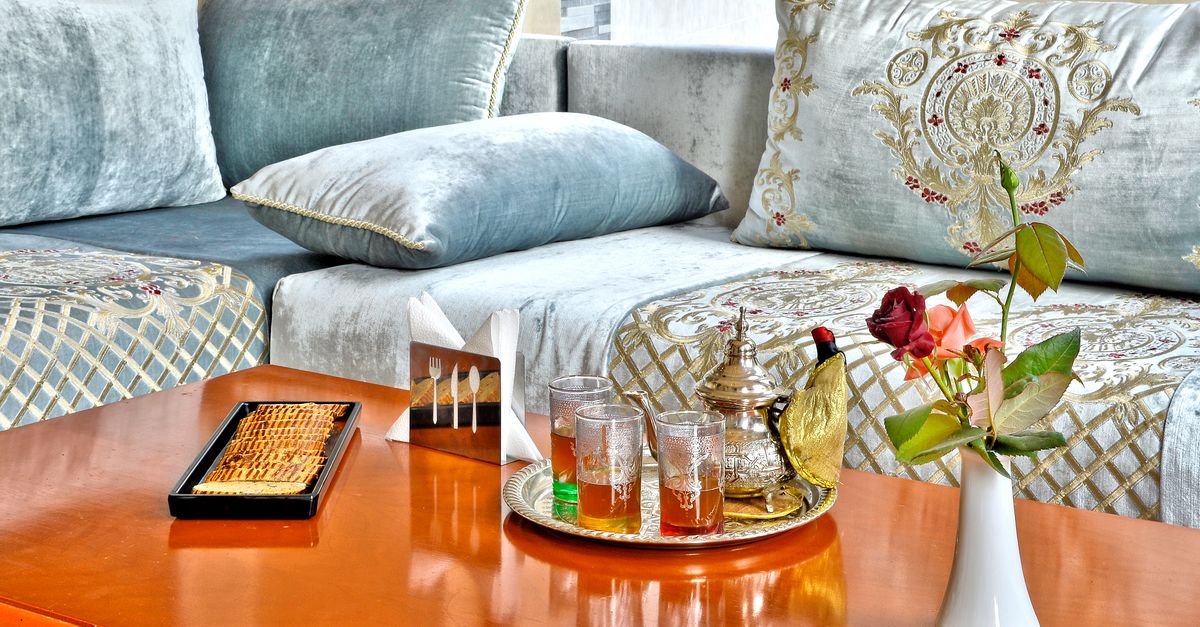
The Ritual of Atay: Understanding Moroccan Mint Tea
Moroccan tea culture relies on a deliberate balance of imported Chinese gunpowder green tea, fresh herbs, refined sugar, and boiling water. Although tea was introduced to North African trade routes centuries ago, Fassi culture elevated its preparation into an exact social art form. In Fez, master households take pride in their custom tea blends, modifying herbs depending on the micro-season and household health traditions.
The base ingredient is Chinese gunpowder green tea (special gunpowder), chosen for its tight, rolled pellets that open gradually upon steeping. To this foundation, spearmint (naana) is added in generous quantities. However, during cooler winter months or special gatherings, Fassi hosts often replace or supplement spearmint with wild herbs grown in the surrounding Saïss plain and Rif foothills, such as sheeba (absinthe/wormwood), louiza (lemon verbena), or mardaqoosh (marjoram).
The Pouring Technique: Aesthetics, Temperature, and Aeration
The preparation of atay follows a precise sequence that is rarely rushed. In traditional households, the host prepares the tea at the low table directly in front of seated guests using a brass or silver tray called a seniyya, accompanied by two specialized teapots (bared) and delicate patterned tea glasses (kees).
- Rinsing the Tea: The green tea pellets are rinsed with hot water to remove surface dust and soften bitterness, preserving the pure golden color.
- Steeping with Herbs and Sugar: A large block of cone sugar (sqar) or granulated sugar is added directly into the teapot alongside tightly packed sprigs of fresh mint. Boiling water is poured over the mix.
- The Mixing Pour: To blend the sugar and tea without stirring with a spoon, the host repeatedly pours tea into a glass and returns it directly back into the teapot from a low height.
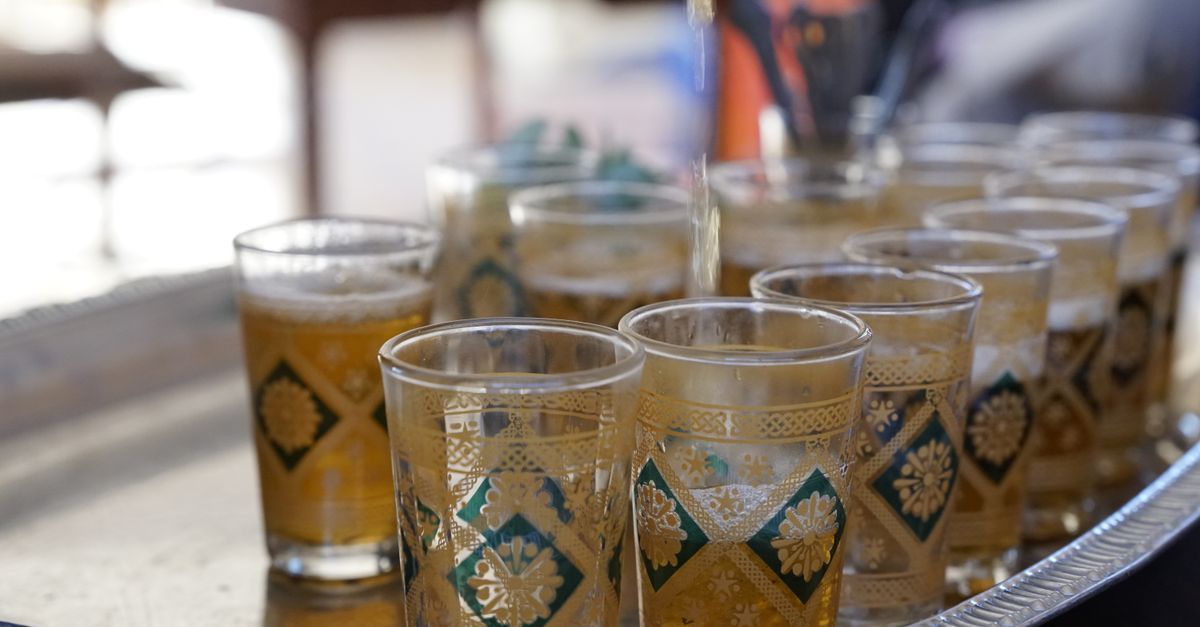
- Creating the Foam (Rghwa): When serving guests, the host raises the teapot high above the table, creating a thin, steady stream that falls directly into small glasses. This height serves three functions: it aerates the liquid, dissolves remaining sugar, and builds a distinctive crown of white foam (rghwa) on top of the glass.
The protective layer of foam serves a practical purpose: it locks in volatile mint aromatics while helping the tea retain its heat in open courtyards. In Fassi culture, serving a glass of tea without foam is considered an incomplete or rushed gesture.
Traditional Sweets: What Is Served with Tea in Fez
Tea in Fez is rarely consumed alone. It is almost always accompanied by traditional Moroccan pastries and dry biscuits, particularly during afternoon visits, family gatherings, or holiday celebrations. Fassi pastry making is famous for its heavy reliance on orange blossom water (ma' zhar), pure almond paste, honey, and subtle spices like cinnamon and mastic gum.
Classic Fassi Pastries
- Kaab el Ghazal (Gazelle Horns): Crescent-shaped pastries stuffed with smooth, sweet almond paste scented with orange blossom water, wrapped in thin pastry dough, and baked until lightly golden.
- Ghoriba: Crumbled shortbread cookies made with sesame seeds, almonds, or semolina. A hallmark of a well-baked ghoriba is its cracked upper surface.
- Chebakia: Deep-fried flower-shaped dough spiced with anise and sesame, coated in warm honey, and sprinkled with toasted sesame seeds. Though strongly associated with Ramadan, it frequently appears at festive afternoon tea tables.
- Fekkas: Twice-baked biscotty-style cookies filled with whole almonds, raisins, and anise seeds, perfect for dipping into hot mint tea.
- Sellou (Sfouf): An unbaked sweet mix made from toasted flour, crushed fried almonds, sesame seeds, honey, and butter, prized for its concentrated energy and rich flavor.

Medina Hospitality: Receiving Tea as a Guest
When walking through the narrow alleyways of Fes el-Bali, offers of tea happen naturally. Merchants may offer a glass while you view carpets, leather goods, or brassware. Artisans in the copper souks might share tea from a small thermos during afternoon breaks. Riad owners will present a full tray upon your arrival.
Accepting a glass of tea is fundamentally an act of social connection. Here is how travelers should navigate these situations gracefully:
- Accepting the Offer: If you have time, accepting tea is polite and appreciated. It indicates respect for the host's hospitality. If you must decline due to time constraints, do so warmly by placing your hand over your heart and thanking the host (Shukran).
- Handling the Glass: Traditional glasses have no handles. Hold the glass by the rim at the top and the bottom base to avoid burning your fingers.
- Pacing Yourself: It is customary to sit through at least three pourings during a formal tea service. As the proverb says, the first glass is as gentle as life, the second as strong as love, and the third as bitter as death.
Where to Experience Authentic Tea Culture in Fez
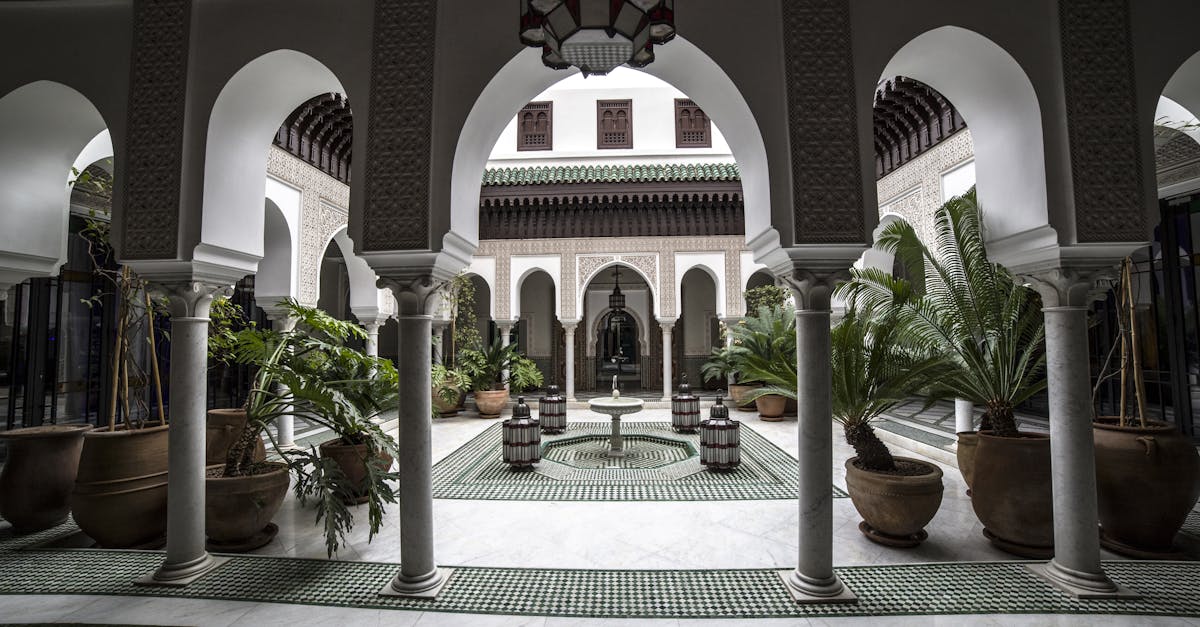
To experience the authentic tea culture of Fez, wander past standard cafes and seek out spots where locals gather for afternoon tea, conversation, and sunset views over the ancient medina skyline.

- Traditional Medina Rooftops: Many restored riads and cultural cafes in Fes el-Bali serve pot-prepared mint tea accompanied by homemade almond pastries on open-air terraces overlooking the minarets of Al-Qarawiyyin.
- Artisan Workshops in Souk El Henna: Observe master craftsmen in copper and leather workshops who maintain traditional afternoon tea routines mid-workspace.
- Local Cafes near Bab Bou Jeloud: While lively and tourist-friendly near the iconic Blue Gate, stepping two streets inward leads to quiet neighbourhood cafes where elder Fassis sit for hours enjoying tea seasoned with seasonal herbs like sheeba.
