
Hammam in Marrakech: What to Expect, Local Etiquette, and Traditional Bathing Rituals
Visiting a hammam in Marrakech is far more than a relaxing spa booking—it is a central pillar of Moroccan social life, physical hygiene, and spiritual cleanliness. Whether you step into a neighborhood public bathhouse or a luxurious private spa within a restored medina riad, understanding the mechanics of the ritual transforms an intimidating experience into a highlight of your journey.
This practical guide outlines the step-by-step bathing process, essential local etiquette, what to bring, and how to choose between neighborhood public baths and high-end boutique establishments.
What Is a Moroccan Hammam?
A hammam is a traditional steam bath common across North Africa and the Middle East. Rooted historically in Roman and Byzantine bathing practices, the hammam adapted to Islamic traditions where communal washing before prayers remains vital. In Morocco, residential quarters were historically built around five core amenities: the mosque, the bread oven (farnatchi), the school, the water fountain, and the neighborhood hammam.
Traditionally, excess heat from the neighborhood wood-fired oven was piped directly beneath the tile floors of the adjacent bathhouse to heat the rooms and water. While modern installations sometimes use boilers, many old-town medina hammams still rely on this symbiotic heating method.
Public Hammams vs. Private Spa Hammams
Before booking or venturing out, it is important to choose which type of hammam aligns best with your comfort level and travel expectations.
1. Public Neighborhood Hammams (Hammam Popular)
These are functional, authentic bathhouses used regularly by local residents. They are separated strictly by gender—either featuring separate sections for men and women or operating under designated hours for each sex.
- Experience: Communal, utilitarian, and authentic. You sit on a warm tiled floor in a shared steam room.
- Cost: Typically around 10 to 20 Moroccan Dirhams (MAD) for entry, with optional scrubbing services provided by a bath attendant (known as a tiyaba for women or kiyas for men) for an extra 30 to 50 MAD.
- Best For: Independent travelers looking for authentic cultural immersion on a budget.
2. Private or Day-Spa Hammams
Designed primarily for international visitors, these establishments offer private rooms, ambient lighting, scented steam, and guided one-on-one pampering sessions.
- Experience: Quiet, comfortable, and tailored. Couples can often scrub together in private rooms, and sessions are usually followed by an argan oil massage.
- Cost: Prices generally range from 250 to 800+ MAD per person depending on inclusions and luxury level.
- Best For: Travelers looking for privacy, relaxation, enhanced comfort, or a romantic experience.
Step-by-Step: The Traditional Bathing Ritual
Whether you choose a public or private facility, the basic Moroccan bathing sequence remains virtually identical. The process follows a systematic heating, softening, exfoliating, and rinsing method.
Step 1: The Transition and Steaming
Upon entering, you change out of your street clothes into appropriate swimwear or undergarments. You step through three progressively warmer rooms: the cool room (changing area), the warm room, and the hot steam room. You begin in the hot room for 15 to 20 minutes to allow heat and steam to open your pores and soften dead skin.
Step 2: Application of Savon Noir
Once your body is warm and perspiration begins, you (or your attendant) apply savon noir (black soap). Made from dark crushed olives, vegetable oil, and potassium hydroxide, this thick paste coats the skin without foaming. It is left on your body for 5 to 10 minutes to break down dead skin layers.
Step 3: The Warm Water Rinse
Before exfoliation begins, the black soap must be completely rinsed away using buckets of warm water. If soap remains on the skin, the exfoliator glove will slide across the surface rather than gripping dead skin cells.
Step 4: Deep Exfoliation (The Scrub)
Using a coarse glove called a kessa, the attendant or your bathing partner scrubs your skin using firm, linear strokes. Strands of dead skin rolled into small gray ribbons will visibly lift off your body. While firm scrubbing can feel intense, it should never cause sharp pain—you can request a softer touch by saying "Shwiya" (a little bit gentler).
Step 5: Clay Mask Treatment (Ghassoul)
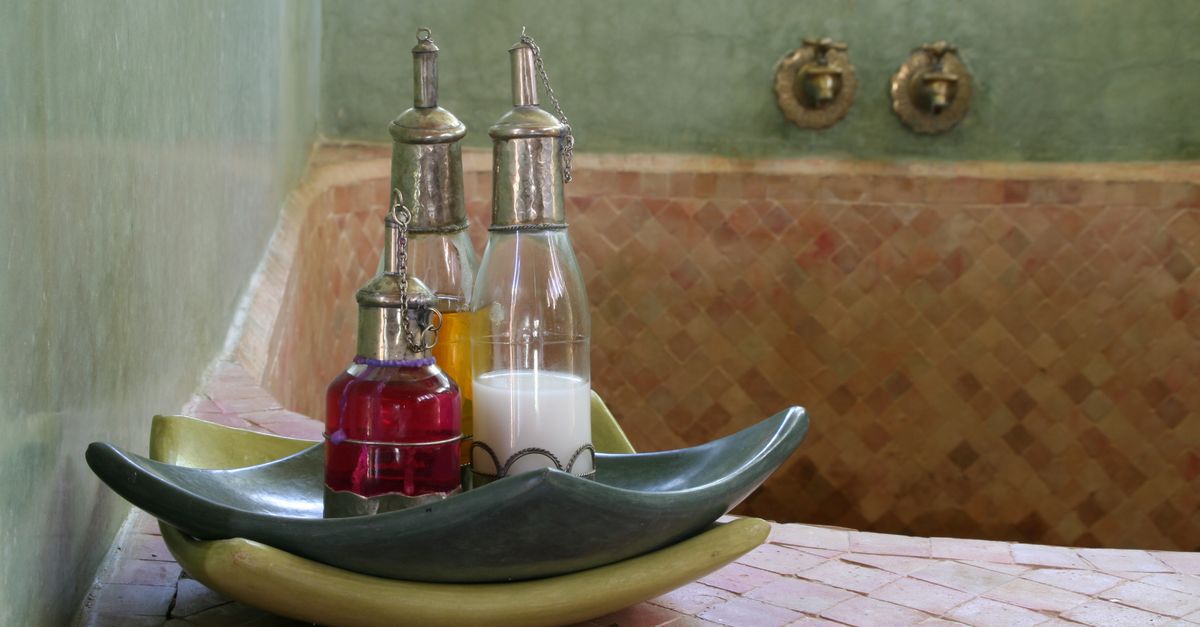
Following the scrub, many hammam sessions include a full-body application of ghassoul (rhassoul)—a natural mineral clay mined from the Atlas Mountains mixed with rosewater or orange blossom water. This mask detoxifies, smooths, and calms refreshed skin.
Step 6: Final Rinse and Hydration
After a thorough final rinse with cool or lukewarm water, you move back to the cool room to dry off. Because exfoliation removes natural oils, completing the ritual with pure Moroccan argan oil helps seal in moisture.
Essential Local Etiquette and Unspoken Rules
Navigating a communal public bathhouse requires understanding local social customs to ensure a respectful visit.
- Nudity Expectations: Total nudity is generally unacceptable in Moroccan public hammams. Women typically wear underwear or bikini bottoms; men wear swim trunks or dark underwear. In private luxury spas, disposable underwear is often provided.
- Water Conservation: Water is a precious resource. In public bathhouses where you fill your own plastic buckets from central spigots, use only what you need and avoid wasting hot water.
- Space Respect: Keep your personal items grouped tightly together on the tiled floor. Avoid splashing water onto sitting areas prepared by fellow bathers.
- Tipping (Bakshish): Tipping is expected in both setting types. In a public hammam, tip your tiyaba or kiyas directly around 20 to 30 MAD for their scrubbing service. In a private spa, a tip of 10% to 15% for your therapist is standard practice.
What to Pack for Your Hammam Visit
If you choose a private spa, towels, robes, disposable underwear, toiletries, and slippers are provided. However, if you plan to visit a traditional neighborhood public hammam, bring your own supplies:
- Two Towels: One small towel to sit on inside the steam room and one large dry towel for after your bath.
- Change of Underwear: You will wear one pair inside the wet rooms, so bring a dry pair for after your session.
- Plastic Flip-Flops: Hammam floors can be hot and slippery; waterproof footwear is essential for safety and hygiene.
- Bathing Supplies: A tub of savon noir, an authentic kessa glove, hair shampoo, and body moisturizer or argan oil (widely sold in medina souks).
- A Small Plastic Bucket and Mat: Available for purchase at medina hardware stalls to scoop warm water and cushion warm stone floors.

Local Food & Culinary Traditions After the Bath
In Moroccan culture, completing a hammam session is frequently followed by a light, nourishing meal to restore electrolytes and hydrate. A iconic dish associated with relaxation and leisure in Marrakech is Tangia Marrakchia.
- Dish Name & Ingredients: Tangia Marrakchia consists of slow-cooked beef or lamb seasoned with preserved lemons, garlic, cumin, saffron, and smen (aged salted butter).
- Regional Link: Unique to Marrakech, Tangia is historically associated with bachelor artisans and hammam workers. The clay urn containing the meat is tucked into the warm ashes of the farnatchi (the furnace room heating the neighborhood hammam) to slow-cook for hours.
- Typical Time & Occasion: Eaten typically during late afternoon or early evening, often following a hammam visit or during social gatherings among friends.
- Where Visitors Find It: Visitors can sample authentic Tangia across the medina, notably near the historic spice markets and around Jemaa el-Fnaa, where specialized eateries prepare it daily in traditional clay pots.
Practical Advice and Best Timing
To get maximum benefit from your hammam visit, keep these practical planning tips in mind:
- Schedule Wisely: Plan your hammam visit toward the middle or end of your sightseeing day. Deep exfoliation leaves you warm, clean, and relaxed, making strenuous walking immediately afterward uncomfortable.
- Avoid Direct Sun Exposure: Freshly exfoliated skin is vulnerable to sunburn. Avoid scheduling a deep scrub immediately before a sunny desert excursion or long daytime walking tour.
- Hydrate Well: Thermal steam causes significant fluid loss. Drink plenty of water before entering and enjoy warm mint tea traditionally served after your session.
- Medical Considerations: If you suffer from cardiovascular conditions, low blood pressure, or severe skin conditions, exercise caution or opt out of high-heat steam environments.
Summary and Takeaway
Participating in a hammam ritual is one of the most enriching cultural experiences available in Marrakech. By respecting local nudity norms, bringing the right supplies for public baths, or choosing a reputable private spa, you can comfortably embrace a traditional practice that leaves you refreshed and culturally connected to Morocco.
