
In Tetouan, tea is not merely a refreshing beverage or a quick pause between daily tasks. It is an intricate cultural ritual that sits at the intersection of history, family hospitality, and regional botanical knowledge. Situated at the foot of the Rif Mountains near the Mediterranean coast, Tetouan offers a tea experience noticeably distinct from the central plains or southern desert regions of Morocco.
Understanding Tetouani tea culture requires looking through the lens of its unique Hispano-Moorish heritage. From the botanical blends adjusted for Mediterranean seasons to the precise etiquette of home hospitality, northern tea traditions reveal how deeply historical migration shapes the modern Moroccan table. This guide explores the distinct character of Tetouani tea, how to navigate local tea etiquette, and where travelers can experience this enduring art form authentically.

The Andalusian Roots of Northern Moroccan Tea Culture
Tetouan's history was fundamentally altered following the Reconquista in Spain, particularly after the fall of Granada in 1492 and the subsequent expulsion of the Moriscos in 1609. Refeeding into the city, Andalusian refugees rebuilt Tetouan, bringing refined courtly aesthetics, urban architecture, musical traditions, and culinary customs. This heritage continues to permeate daily life in the UNESCO-listed medina.
While Chinese gunpowder green tea (zhu cha) was introduced across Morocco in the 18th and 19th centuries through global trade networks, northern urban centers like Tetouan incorporated this staple into pre-existing Andalusian traditions of botanical infusion and hospitality. The emphasis placed on visual elegance, aromatic balance, and understated refinement directly mirrors Hispano-Moorish domestic arts.
In contrast to the bold, intensely sweet, and heavily aerated brews of southern trade routes, Tetouani tea leans toward aromatic subtlety. The proportion of tea leaves, sugar, and water is carefully controlled to ensure the botanicals complement rather than overpower one another, creating a clean taste profile that reflects the temperate coastal environment.
Key Botanicals: What Makes Tetouani Tea Distinctive
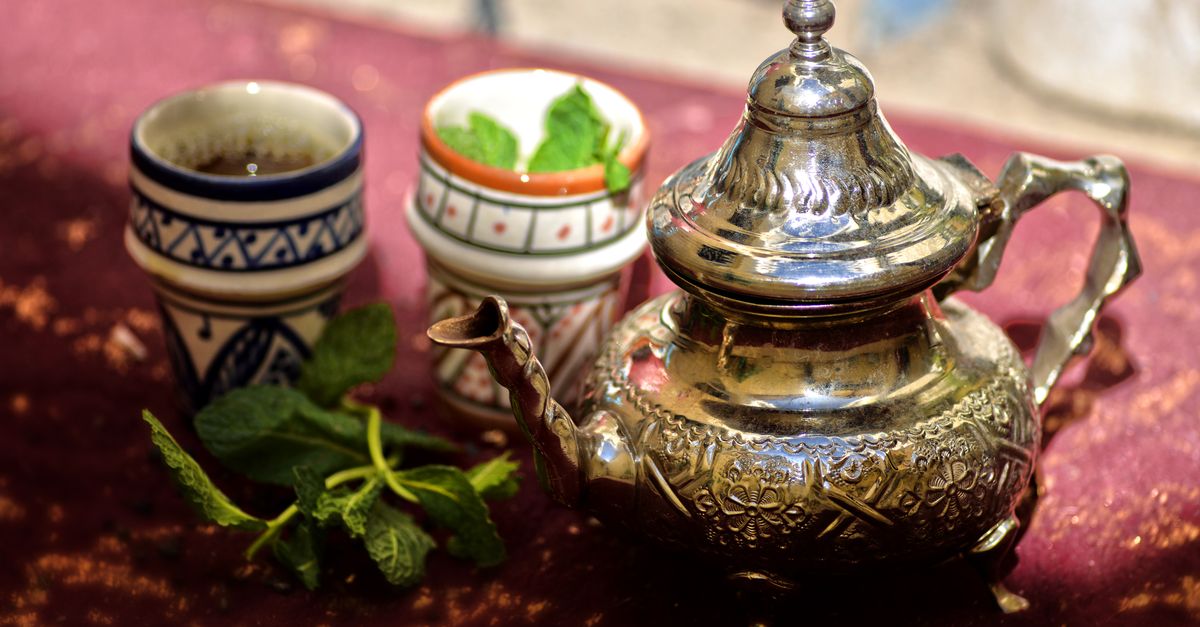
While spearmint (na'na') remains the primary herb throughout Morocco, northern teapots adjust their profiles throughout the calendar year based on seasonal microclimates in the surrounding Rif valley. A traditional Tetouani household rarely relies on mint alone.
- Na'na' (Spearmint): The standard base herb, prized for smooth sweetness. In Tetouan, short-stemmed mint harvested from nearby mountain slopes is preferred over broader-leafed lowland varieties.
- Fliou (Pennyroyal / Wild Mint): Highly popular during damp winter months in the North. It imparts a pungent, slightly medicinal, warming aroma believed to ward off seasonal chills.
- Luiza (Lemon Verbena): Frequently added to evening brews or served alongside mint. It provides a soothing citrus quality that lightens the astringency of green tea.
- Sheeba (Wormwood): Used sparingly when winter temperatures drop. Because of its intense bitterness, Tetouani hosts use only a tiny sprig, balancing it carefully with sugar.
- Mardakoosh (Marjoram) & Zhar (Orange Blossom Water): Reflecting direct Hispano-Moorish culinary lineage, a drop or two of distilled orange blossom water or a small sprig of fresh marjoram is sometimes introduced to celebrate festive family gatherings.
The selection of herbs is guided by seasonal availability and health properties. A host in Tetouan takes pride in selecting fresh herbs daily from local medina markets, discarding any stems that show signs of wilting or bruising.
The Ritual of Preparation: Northern Techniques and Precision
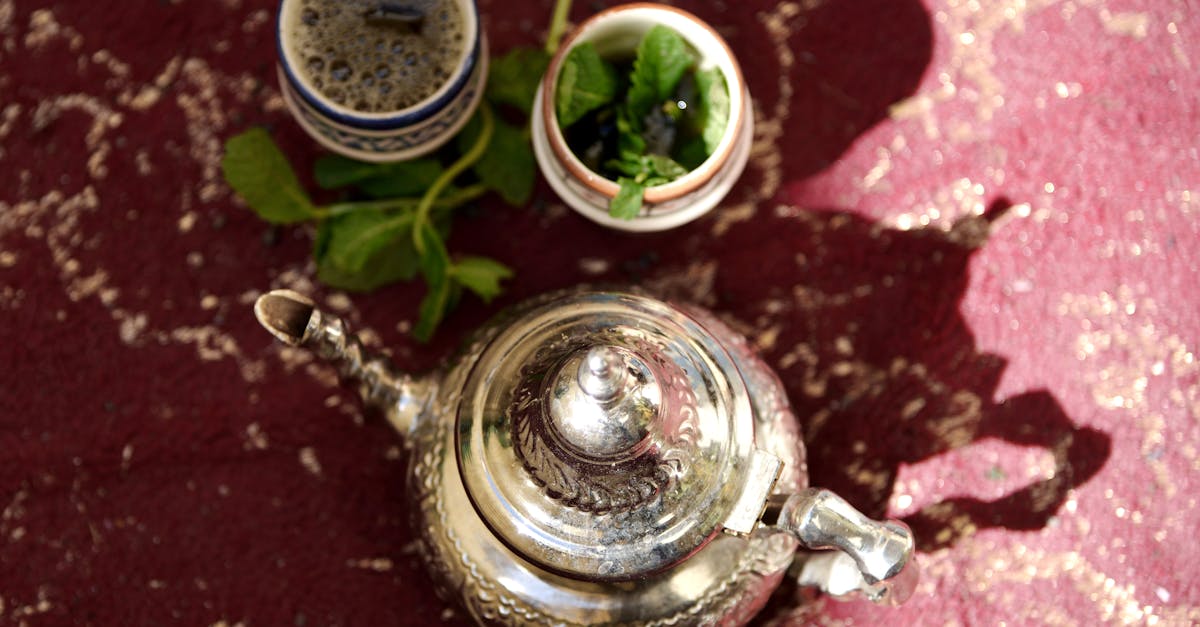
Preparing tea in a Tetouani household follows a measured sequence. While the steps appear simple, execution requires patience and practiced control over heat and proportions.
1. Cleansing the Leaf
A measured amount of gunpowder green tea is placed directly into a stainless steel or silver-plated teapot (berrad). Boiling water is poured over the leaves and swirled gently for several seconds before being discarded. This initial wash softens the leaves and removes surface dust and harsh bitterness without removing the essential oils.
2. The First Decoction
Fresh boiling water is added back to the teapot with the washed leaves. In northern households, the teapot is frequently placed back over a low flame or hot burner for 1 to 2 minutes. This brief simmering step extracts the full character of the green tea leaf before delicate fresh herbs are introduced.
3. Steeping the Herbs and Sugar
The pot is removed from the heat source before adding fresh, hand-cleaned mint and secondary botanicals. Sugar—traditionally broken from a hard sugar loaf (qalb sukkar) or high-density sugar cones—is added. In Tetouan, the host avoids boiling the fresh herbs directly on the flame, as excess heat destroys volatile aromatic oils and makes mint bitter.
4. Mixing and Aeration
Rather than stirring with a spoon, the mixture is blended by pouring tea into a glass and tipping it back into the pot. This process is repeated three or four times. It dissolves the sugar evenly, equilibrates the heat, and builds a delicate crown of foam (regga) on top of the liquid, which helps trap aromatics inside the serving glass.
Family Hospitality: Tea Etiquette for Visitors in Tetouan
Receiving an invitation to drink tea in a private home or family workshop is a foundational element of Northern Moroccan culture. Navigating these situations with cultural awareness creates memorable connections for travelers.
Understanding the Welcome
In Tetouan, offering tea is an obligation of honor rather than an optional courtesy. Declining an offer outright when entering someone's home can be interpreted as a rejection of their goodwill. If you are full or in a rush, accepting a single small glass and taking polite, slow sips demonstrates proper respect.
The Three-Glass Tradition
A well-known proverb across North Africa states that the first glass is gentle like life, the second strong like love, and the third bitter like death. In Tetouani domestic culture, serving three rounds from the same pot—or fresh pots prepared in succession—signifies full hospitality. Guests are encouraged to relax and take their time; rushing through a glass signals that you view the visit as a practical transaction rather than a social engagement.
Table Manners and Handling the Glass
Tea in Morocco is served scalding hot in rimless glass cups. To avoid burning your fingers, hold the glass using only the rim at the top and the base at the bottom with your right hand. In traditional settings, the right hand is universally preferred for eating, drinking, and accepting serving trays.
Local Pastries That Accompany Tetouani Tea
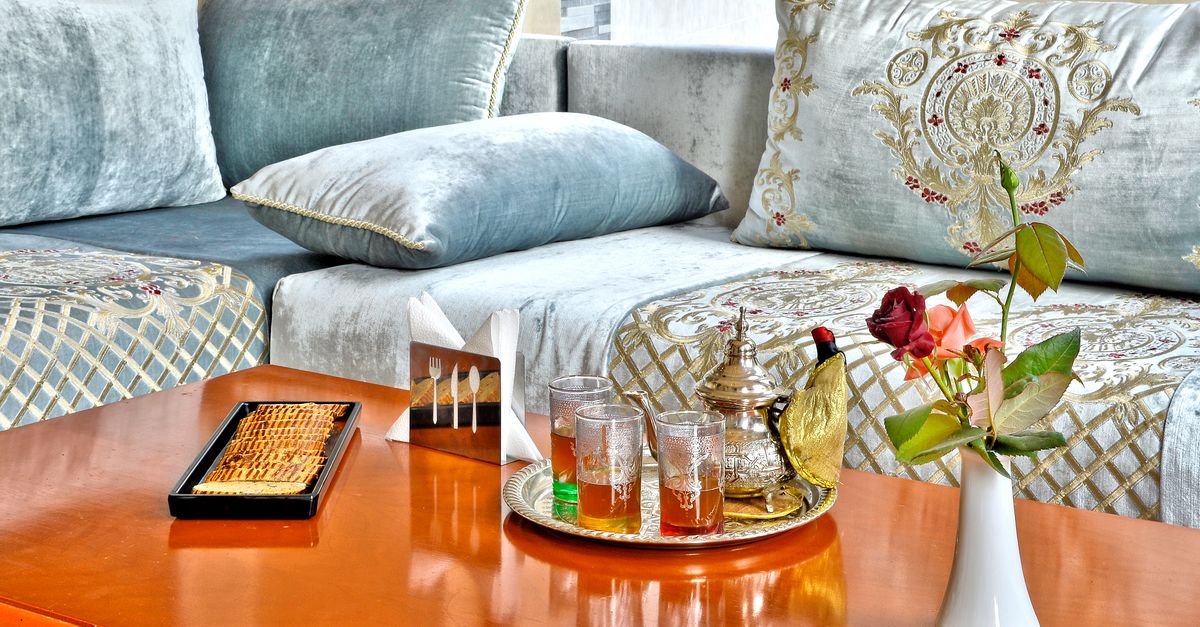
A formal tea service in Tetouan is rarely presented without regional baked goods. The town's pastry making displays clear Andalusian and Mediterranean influences, featuring delicate almond pastes, orange flower scents, and light crusts.
- Ka'ak Tétouani: Ring-shaped biscuits seasoned with aniseed, sesame, and orange blossom water. Their light crunch and subtle spice make them ideal for dipping into hot mint tea.
- M'hancha (Snake Pastry): Coiled phyllo pastry filled with sweet almond paste, cinnamon, and orange blossom water, baked until golden and drizzled with honey.
- Gazelle Horns (K'ab el Ghazal): Tetouan's variation of this nationwide classic features a delicate, paper-thin pastry shell wrapped tightly around finely ground almonds scented with pure orange blossom distillate.
- Fekkas: Twice-baked crisp biscuits packed with almonds and raisins, similar to Italian biscotti, engineered for long shelf life and morning tea dipping.

Where to Experience Authentic Tea in Tetouan
Travelers seeking genuine tea culture in Tetouan have several distinct environments to choose from, each offering a different slice of northern daily life.
1. Historic Medina Cafes
Tucked into small plazas near Place Hassan II or along the main arterial streets of Souk el Hout, small traditional cafes feature wooden benches, low tables, and brass teapots. These establishments serve as vital social hubs where local residents gather to debate news, play chess, and watch the city pass by. Ordering a berrad (small pot) gives you time to rest while absorbing the rhythm of the old city.
2. Traditional Artisan Workshops
While walking through the medina's specialized quarters—such as the leather tanners, wood carvers, or textile weavers—craftspeople frequently keep a small burner and teapot near their workbench. Accepting a tea offer during a conversation about craft traditions often leads to meaningful dialogue without aggressive sales pressure.
3. Modern Tea Lounges in the Ensanche
The Spanish colonial district (El Ensanche), built outside the old medina walls in the early 20th century, features wide boulevards and classic European-style cafes. Taking tea on an outdoor terrace in this neighborhood offers a stark architectural contrast to the medina, showcasing Tetouan's dual identity as both an ancient Andalusian stronghold and a modern Mediterranean city.
Practical Guidance for Travelers
Cost Expectations
Tea in Tetouan remains very affordable. An individual glass at a simple local neighborhood cafe typically costs between 5 to 10 Moroccan Dirhams (MAD). Ordering a full teapot (berrad) suitable for 2–3 glasses generally ranges from 15 to 25 MAD. Prices may be slightly higher at established tourist-oriented spots or upscale venues in the Ensanche.
Payment and Tipping Realities
Cash is required at virtually all traditional medina cafes, small tea stalls, and local bakeries. Credit cards are rarely accepted outside modern hotels or larger international restaurants. Keep small denomination coins and banknotes (5, 10, and 20 MAD notes) handy. Leaving a small tip of 2 to 5 MAD on the table for coffee or tea service is standard local practice.
Managing Sugar Levels
Moroccan tea is traditionally prepared very sweet. If you prefer reduced sugar or wish to add sugar yourself, state clearly when ordering:
