
Choosing where to stay in Tangier profoundly shapes your experience in Morocco’s historic gateway city. Positioned right where the Mediterranean Sea meets the Atlantic Ocean, Tangier balances centuries of international diplomacy, literary romance, and dramatic maritime views with modern high-speed rail connections and coastal resorts.
Because Tangier’s topography ranges from steep, winding hilltop alleys to flat coastal boulevards, your neighborhood choice dictates how much walking you will do, how easily accessible your hotel is by taxi, and the exact atmosphere surrounding you when you step out the door. This guide breaks down Tangier’s primary districts, highlighting who each area suits best, what accommodations look like, and key practical considerations for your trip.

Understanding Tangier’s Layout and Neighborhoods
Tangier is geographically divided into several distinct districts, each representing a different layer of the city’s complex history. Unlike flat imperial cities, Tangier built its oldest quarters high on the cliffs overlooking the Bay of Tangier, while 20th-century expansions spread across neighboring hills and along the coastline.
- The Medina: The ancient walled quarter, filled with labyrinthine alleys, traditional markets, street vendors, and restored guesthouses.
- The Kasbah: The fortified residential stronghold at the highest point of the city, known for ocean breezes, boutique stays, and spectacular views.
- Ville Nouvelle (New City): Established during the French and international administration periods, featuring wide avenues, sidewalk cafes, Art Deco architecture, and modern mid-range hotels.
- Malabata & The City Beach: The contemporary waterfront district stretching east, lined with large luxury resorts, international hotel chains, and modern apartments.
- Marshan & Mountain (Vieille Montagne): Leafy, affluent residential districts west of the Kasbah, hosting luxury villas, embassies, and historic hideaways.
1. The Medina: Cultural Immersion & Historic Charm
The historic Medina is the sensory heart of Tangier. Enclosed within ancient ramparts, it is a bustling maze of cobblestone lanes, spice markets, artisan workshops, and neighborhood bakeries. Staying here puts you steps away from famous sights like Petit Socco and the Tangier American Legation Museum.
Who It Is Best For
The Medina is ideal for first-time visitors, cultural enthusiasts, and travelers who want an atmospheric, authentic atmosphere where daily life unfolds right outside their door.
Accommodation Styles
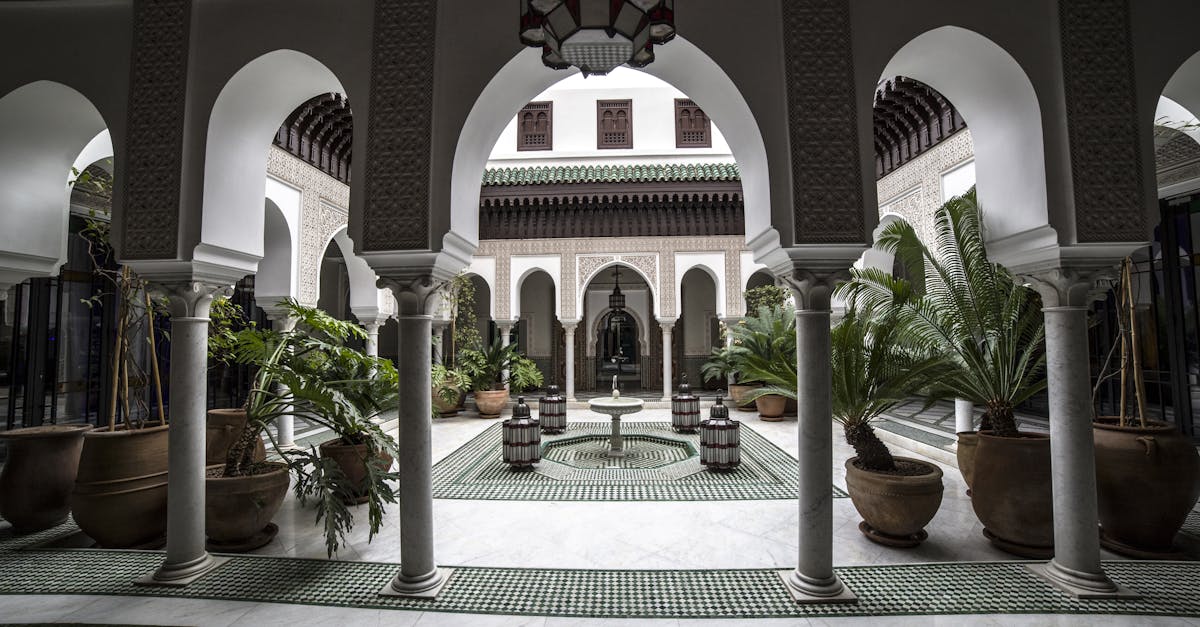
Accommodations inside the Medina consist mostly of traditional Moroccan riads and dar guesthouses. These properties feature plain exterior walls that open into peaceful central courtyards, often decorated with zellige tiles, fountain features, and rooftop terraces overlooking the crowded rooftops below.
Pros and Cons of Staying in the Medina
- Pros: Unbeatable historical atmosphere, walkable access to major markets and historic landmarks, unique boutique architecture.
- Cons: No vehicle access on most streets (requiring luggage porterage), steep cobblestone steps, potential for street noise near busy squares, easy to lose your direction.
2. The Kasbah: Panoramic Views & Bohemian Boutique Stays
Sitting at the summit of the hill overlooking the Medina and the Mediterranean, the Kasbah was historically the governor’s stronghold. Today, it is Tangier’s most artistic and tranquil residential quarter, characterized by whitewashed houses, pastel trim, quiet alleyways, and cozy cafes.

Who It Is Best For
The Kasbah is perfect for couples, solo travelers, artists, and visitors seeking a quieter historic environment with incredible ocean views over the Strait of Gibraltar toward Spain.
Accommodation Styles
Here you will find high-end boutique hotels, artistically restored historic homes, and intimate bed-and-breakfasts. Many Kasbah stays feature expansive rooftop terraces where guests take breakfast while watching ferries cross the strait.
Pros and Cons of Staying in the Kasbah
- Pros: Stunning panoramic ocean views, quieter streets than the lower Medina, beautiful bohemian atmosphere, close proximity to the Kasbah Museum (Kasbah Museum of Mediterranean Cultures).
- Cons: Strenuous uphill walking required to return home, limited taxi access within the narrowest gates, higher average night rates than mid-range new town options.
3. Ville Nouvelle: Art Deco Charm, Cafes, and Modern Convenience
Constructed primarily in the early-to-mid 20th century, the Ville Nouvelle centers around Boulevard Pasteur, Place de France, and Grand Socco (Place 9 de Avril). This area showcases Tangier’s international era, lined with French-style brasseries, Spanish cafes, and vintage cinema houses.

Who It Is Best For
Great for business travelers, families with strollers, travelers with heavy luggage, and anyone who prefers modern hotel amenities like elevators, private parking, and straightforward taxi pickup.
Accommodation Styles
Accommodations range from converted mid-century modern hotels to international chain properties and serviced self-catering apartments. Rooms are generally larger than Medina riad rooms and feature standard modern bathrooms.
Pros and Cons of Staying in Ville Nouvelle
- Pros: Direct vehicle access, easy walking on paved sidewalks, proximity to banks and modern pharmacies, excellent access to historic sidewalk coffee houses.
- Cons: Lacks the traditional architectural charm of a riad, vehicle traffic noise along major boulevards.
4. Malabata & The Beachfront: Resort Comfort and Ocean Views
Extending along the curve of Tangier Bay towards Malabata Point, the beach district is the modern, cosmopolitan face of Tangier. The area features a long, wide palm-lined promenade ideal for evening strolls along the sand.

Who It Is Best For
Ideal for vacationers seeking swimming pools, beach access, fitness centers, on-site dining, and spacious multi-room resorts, as well as travelers taking the Al Boraq high-speed train from nearby Tangier Ville railway station.
Accommodation Styles
Large luxury beachfront hotels and high-rise resort complexes dominate this strip, offering full service, outdoor swimming pools, international dining options, and ocean-facing balconies.
Pros and Cons of Staying in Malabata
- Pros: Full modern resort amenities, ocean views, easy parking, convenient access to the main train station and beach activities.
- Cons: Lacks historic character, requires a short taxi ride to reach the historic Medina and Kasbah sites.
Tangier Neighborhood Comparison Summary
| Neighborhood | Vibe & Atmosphere | Best Accommodations | Key Advantage | Main Drawback |
|---|---|---|---|---|
| Medina | Historic, vibrant, bustling | Traditional Riads & Dars | Walking access to historic sites | No cars; steep stairs |
| Kasbah | Quiet, artistic, panoramic | Boutique Hotels & Luxury Stays | Sweeping ocean views | Uphill walk from town |
| Ville Nouvelle | Modern, architectural, cafe culture | Mid-range & Business Hotels | Easy vehicle access & navigation | Less traditional charm |
| Malabata / Beach | Resort-style, relaxed, coastal | Full-Service Beach Resorts | Pools, beach & train access | Farther from old city sights |
Local Food and Culinary Highlights
Tangier’s coastal northern location heavily influences its regional cuisine, blending traditional Moroccan spice profiles with fresh seafood and Mediterranean traditions.
- Sayadiyya / Tangier Fish Tagine: A local specialty made with fresh daily catch—such as sea bass or red snapper—cooked slowly in a earthenware tagine with charmoula (a vibrant marinade of coriander, parsley, garlic, cumin, paprika, lemon juice, and olive oil), tomatoes, and green peppers. It is typically enjoyed for lunch and is readily found in traditional restaurants in the Medina and along the port.
- Bissara: A thick, velvety broad bean (or split pea) soup blended with garlic, olive oil, cumin, and dried chili pepper. Traditionally served hot with fresh flatbread for breakfast or early lunch during cooler months, visitors can sample authentic bissara at small neighborhood eateries near Grand Socco.
- Bstilla (Seafood Style): Unlike the sweet-and-savory chicken bstilla of Fez, Tangier’s regional variation often features delicate layers of thin warqa pastry filled with spiced shrimp, calamari, vermicelli noodles, and white fish, baked until golden brown. It is usually served at special family dinners or traditional Moroccan feast restaurants.
Important Local Attractions with Practical Details
Exploring Tangier involves navigating steep terrain and distinct historic quarters. Key highlights include:
- Tangier American Legation Museum: The first American public property outside the United States, gifted in 1821. Located inside the Medina, it houses cultural exhibits, historical documents, and art. Allocate 1–2 hours. Accessible on foot via Medina alleys. Highly suitable for families and history enthusiasts.
- Kasbah Museum of Mediterranean Cultures (Dar al-Makhzen): Situated in the former Sultan’s palace at the top of the Kasbah, featuring archaeological artifacts and historic courtyard gardens. Plan for 1–2 hours. Requires uphill walking; nearby options include panoramic lookout cafes along the ramparts.
- Caves of Hercules (Grotte d’Hercule): Located 14 km west of the city along Cape Spartel, famous for its ocean-facing opening shaped like the map of Africa. Best visited early morning to avoid tour buses. Allocate 1 hour for the site, plus transport time. Accessible by grand taxi or private hire. Caution: steps can be wet and slippery.
Navigating Arrival and Transport to Your Accommodation
How you reach your hotel depends heavily on your point of arrival and chosen district:
- By High-Speed Train (Al Boraq): Trains arrive at Tangier Ville station, located right near the Malabata beachfront. Petit Taxis (small blue cars with yellow stripes) wait outside to take you to Ville Nouvelle or the Medina drop-off points.
- By Ferry: Passenger ferries arriving at Tangier City Port (Tangier Ville) land directly at the base of the Medina and Kasbah cliffs. Ferries arriving at Tangier Med port land 45 kilometers east, requiring a bus, grand taxi, or private transfer into the city.
- By Air: Tangier Ibn Battouta Airport (TNG) lies roughly 12 kilometers southwest. Official taxis offer fixed-rate transfers to the city center and Medina outer gates.
If you are staying inside the Medina or Kasbah, taxis cannot drive down the narrow pedestrian streets. Your driver will drop you at the nearest gate (such as Bab Haha, Bab Fahs, or Grand Socco). Most riads can arrange a porter (carrying a handcart) to meet you at the gate and transport your luggage through the alleys for a modest fee.
Practical Tips for Booking Accommodations in Tangier
Keep these destination-specific details in mind when selecting and booking your room:
- Verify Accessibility Needs: Historic riads feature narrow interior staircases and rarely have elevators. If mobility is a concern, request a ground-floor room or opt for a hotel in Ville Nouvelle or Malabata.
- Climate Control Considerations: Tangier can feel humid in summer and chilly, damp during coastal winter storms. Ensure your accommodation offers combined heating and air conditioning (A/C).
- Noise Levels: Riads feature open-air or glass-topped interior courtyards, meaning sounds carry easily between rooms. If you are a light sleeper, ask for a quiet room on an upper level away from common dining areas.
- Cash Realities: While mid-range and luxury hotels accept major credit cards, smaller guesthouses and riads may require final payment or city taxes in cash (Moroccan Dirham). Confirm payment terms ahead of time.
Local Cultural Context and Etiquette
Tangier is a welcoming, cosmopolitan city with deep cultural roots influenced by Berber, Arab, Andalusian, and European traditions. When staying in residential historic quarters like the Medina or Kasbah, simple etiquette helps ensure a respectful visit:
- Dress respectfully when walking through residential quarters, keeping shoulders and knees covered in non-resort public spaces.
- Always ask permission before taking close-up photographs of local market vendors or residents.
- Tipping small amounts to guesthouse staff, luggage porters, and local drivers is customary and appreciated for good service.
Making Your Final Decision
To choose the best location for your stay, match your primary priority to the district:
For romantic historic charm and step-out access to markets, book a classic riad inside the Medina. If scenic views, quiet surroundings, and artistic heritage matter most, pick a hilltop stay in the Kasbah. For convenience, easy transport, and classic European cafe culture, stay in the Ville Nouvelle. Finally, if you desire swimming pools, contemporary comfort, and quick access to the high-speed rail line, select an oceanfront hotel along Malabata Beach.
